Categories
Uncategorized

Reduce reprographics costs.

It may seem like common sense, but as Voltaire pointed out, ‘common sense is often rare’.

As posted back in 2019, on average, a person consumes more than 4 trees per year.

economist.com: I’m a lumberjack

Get more for your budget!

Print is important. The format of what we print is important. How it’s graphically designed and reproduced can add value (BPIF Stats).

However, over time, print costs to large organisations can be significant.

In a large organisation, if we all just printed a tad more thoughtfully, we could save thousands over a year.

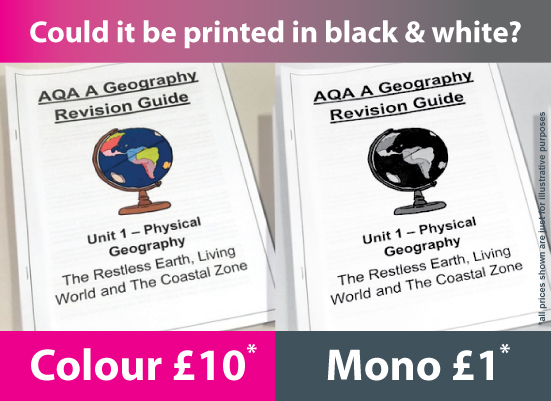
Print in black & white. 

Printing in colour costs ~10 times that of printing in mono.

If 100 colour clicks = £10*, then 100 mono clicks = ~£1
(plus the cost of paper etc)

If you need a bit of bling, then mono print on coloured paper is still cheaper than colour print.

Print smaller, half your costs!

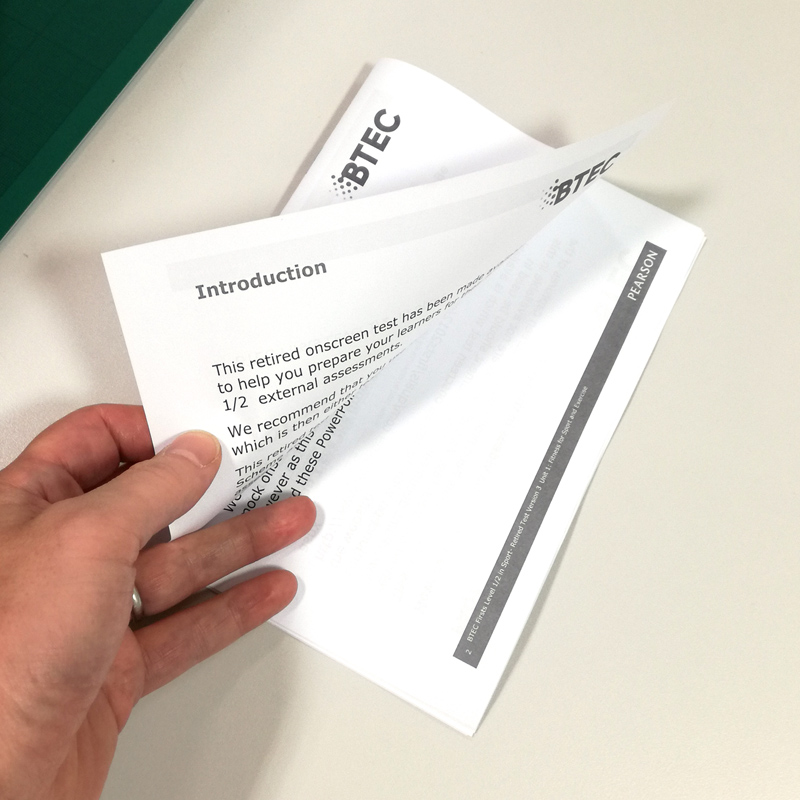
Printing your page as two pages per A4 page, or an A5 booklet can reduce paper and print costs even further!
For example, print as multiple pages/slides per page if possible. Just ask for it as two or even four per A4 page, or an A5 booklet.

If 100 A4 clicks = £10* then 50 A4 clicks (2 per page) = £5
(plus the cost of paper etc)
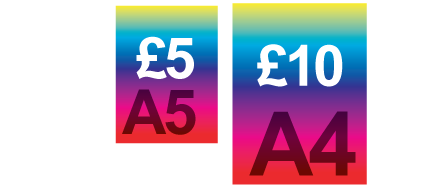
Try to think about costs. Where possible, make it mono and seek to use paper economically.

*Any prices shown are just for illustration.

Another thing worth considering…

A4 rather than A3 paper.

A pack of A3 paper costs >15% more than two packs of A4 paper**. 
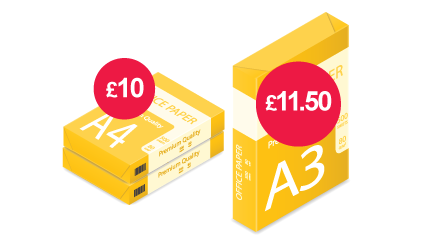
While A3 folded to A4 booklets;

  • are useful to emulate actual exam booklets,
  • can keep work bound better (up to 80pages/sides at a push)

    Arguably,
  • A4 sheets are easier to open/mark for general use, and more importantly cost less.

So, if A4 stapled will be sufficient, please DON’T ask for folded booklets. Is A4 stapled top left, or A4 two-stapled sufficient?
(Remember, folded booklets need to be a multiple of 4 pages, 10 pages as a booklet, has 2 blank sides.)

The costs do mount up over time.

A ream of A3 paper costs significantly more than two reams of A4.


**Market Demand: Because A4 is the standard size for everyday printing, it is mass-produced at higher volumes. A3 is used less frequently, meaning economies of scale slightly favour A4 pricing when purchasing in bulk. Suppliers purchase such large quantities of A4 from the mill, negotiating substantially better pricing, spreading costs across a larger volume of stock. A3 demand is much lower, the mill does not achieve the same production efficiencies, and suppliers don’t have such purchasing power. So, unit cost for A3 remains noticeably higher.

*Any prices shown are just for illustration.
Categories
Uncategorized

Save money, save paper, save time – School Repro.

The article below the stars, written a few years back, will soon be redundant, as Microsoft announced the end of its Publisher trinket. But this leaves us without Publishers unique hyper-useful asset!

Yes, graphics are not a problem and better on many other softwares but … here’s a challenge…

The big big loss, that no other software does in the same hyper easy useful way is print multiple pages per sheet. Publisher allows you to create bespoke page sizes and print multiple pages (mail merged and or double-sided) sheets. This is so so useful for tickets, cards, passes, slips etc.

To date there’s NO other software that offers print bespoke page sizes multiple pages per sheet!

Challenge find an alternative! ?

********************************

Saving money, paper & time… by using MS Publisher* (“shock horror”) to create smaller sized documents that use all of the paper. Ask me!

I have been in the print industry for more than 30 years. I have lived scalpels, pixels, lick & stick, copy & paste, raster & vector… and I’ve experienced numerous graphics-for-print software platforms. While Adobe Creative Suite and the like are still the print craftsperson‘s go-to tool, I now surprise myself by recommending a more domestic tool for easy print and copy projects.
People in industries such as education don’t necessarily have access to professional tools such as Adobe Creative Suite. Teachers and educators have better things to do with their teaching and learning time than play with toolboxes and layers. They tend to stick to Microsoft’s Word† (it’s good at word processing) and PowerPoint† (because the screen is their primary communication tool).

“Eeeeek!”

However, I am often sent documents with boxed items on them; to be printed multiple times, and to be trimmed out into cards or batched sets. This is fine if you want one set, but it does waste paper. If you want a dozen or more, this wastes a lot of paper… and the guillotining and sorting takes ages to avoid mixing sets up.
This uneconomical unproductivity can be easily sorted – saving money**, with zero paper wastage, more print per sheet, and easy guillotining and set sorting – and we can make it look good!
For the layman, I’m recommending more use of software like Microsoft Publisher*, yes MS Publisher can be a versatile tool for the non-professional user when planning for multiple batch printing. Or for simply printing economically. Your Word or PowerPoint creations can usually be transferred to Publisher, but I suggest using it as a default tool for print-based projects.
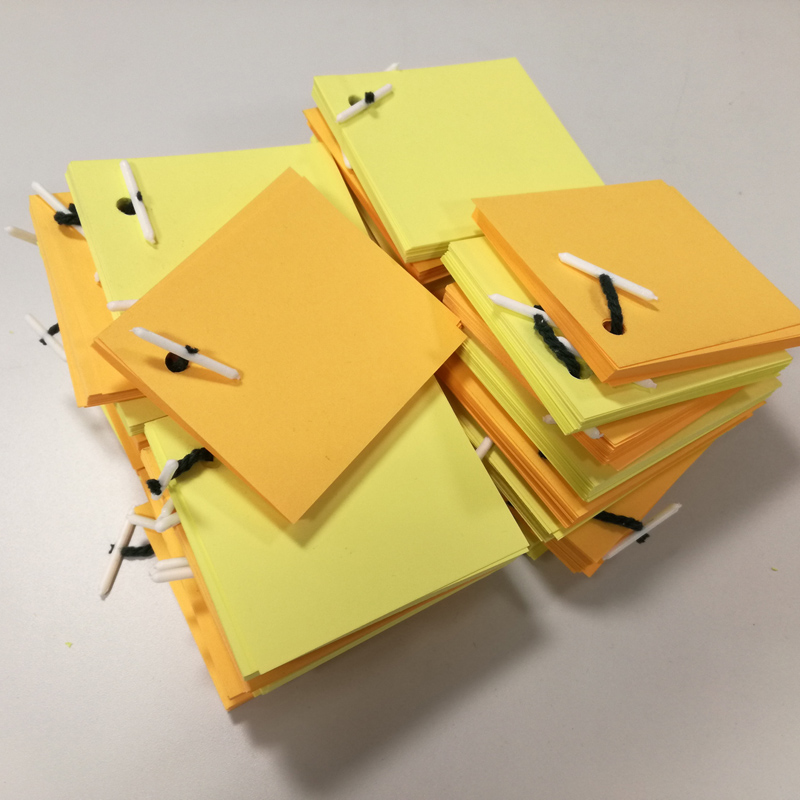
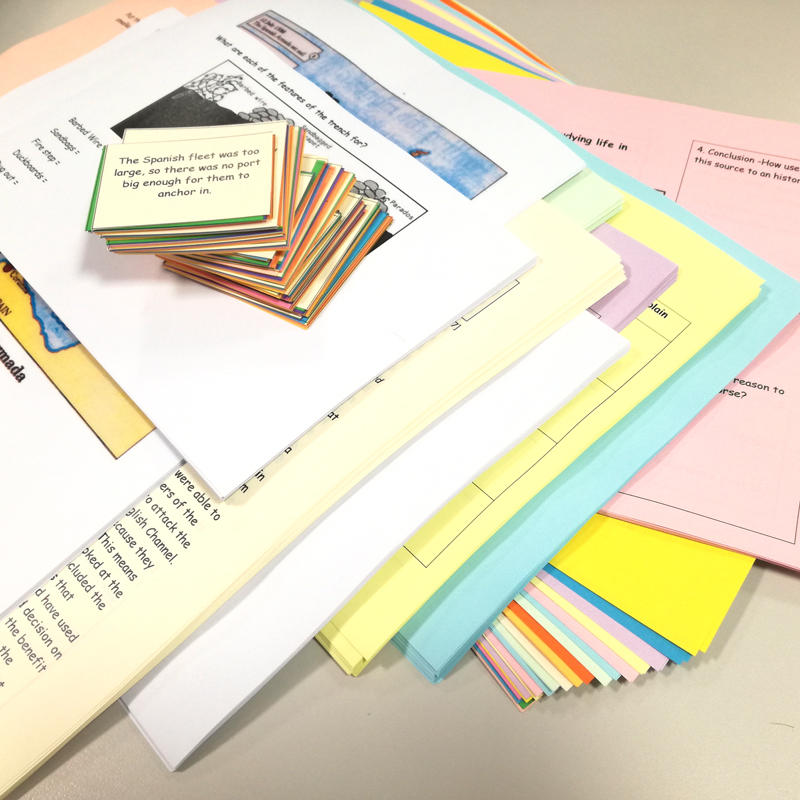
Revision Flash Cards, Study Aids, Card Sorts etc.

Let’s say you want ~20 different small cards.
What you could ask for is 20 A7 cards. (A7 is 8 to a sheet of A4. You could have any size card, as long as it multiples into an A4 page)
So, we set one Publisher page at the desired size, see below,
Duplicate a master, and create our ~20 different pages.
With Publisher we can then print this on A4 as a stack of sets that can be easily electronically guillotined and banded.
It’s versatile, can look great, and it saves time and paper**.
You end up with multiple batches (quantity per sheet) of the set of ~20.


Don’t fret – send me the content, and given time I can create the .Pub doc for you. Just don’t spend your time in Word†, or heaven forbid Powerpoint†, trying to make it look nice.

If you need them – there are few Publisher “cards” and “label” template documents for you to download here:

https://www.dropbox.com/sh/jkg2mjv3we5u59b/AAB6LXvedE3LjTjoD8cA6QTOa?dl=0


*Horror, Yes, Publisher! When I first was prompted to use publisher, because the situation didn’t warrant the cost of the more professional options, I was horrified. For starters, its Microsoft, but my preconceptions about MS turned out to be a tad misplaced. Secondly, it initially looks like you’re using a child’s toy. But get over it! It’s a very versatile tool for simple multiple-page publishing needs. Projects can even look qood, if you use design elements created in Photoshop and Illustrator etc.
†Word is a word processing program. PowerPoint is for creating screen presentations.
**I the long-term, planning economically and productively can save an institution £1000s

Categories
Uncategorized

Reduce your reprographics costs.

economist.com: I’m a lumberjack

In the UK, every worker uses up the equivalent of 4.48 trees per year.

Since 1980 (-2012) global paper consumption increased by half.

Get more for your budget!

“Lovers of print are simply confusing the plate for the food”, the glorious Douglas Adams said this back in 2001. Yes, I am a lover of print but as a visual artist, I am also a lover of the content, and how it’s compiled on the page/plate. The format of what we print is important. How it’s graphically designed, AND how it’s reproduced can add value (BPIF Stats).

What I am highlighting here is that print costs to a large organisation can be significant. If we think about how our print is reproduced we could save thousands of pounds.

It may seem like common sense, but as Voltaire, pointed out ‘common sense is often rare’. In a large organisation, if we all just printed a tad more thoughtfully, we could save thousands over a year.

Let’s serve it up thoughtfully!

Ask for it in Black and White (Mono). 

Printing in colour costs 10 times that of printing in black.

If 100 colour clicks = £10, 100 mono clicks is less than £1. (plus the cost of paper etc)

Put it another way, you can print many times more in mono, as you might in colour!

Is colour on your page necessary? If you have a colour document with a mono page, copier machines can sense that and charge that page as mono, if there’s one small sentence in pink on that page it will charge 10 times as much and print the page in colour

Where possible reduce your use of colour for printing.

If you need bling, then mono print on coloured paper is still cheaper than colour print.

In short, print in mono if colour is not necessary.

Print back to back, or smaller, and half your paper costs!

If you print back to back it can use half the paper of single-sided printing.

Printing your page as A5 or A6 can reduce paper and print costs even further! Just ask for it as A5 or A6.

Reduce paper AND print costs…

Quarter your paper costs and minimise your print cost!

We can easily convert your A4 multiple paged document into an A5 stapled booklet.
If you print as an
A5 booklet, four pages become one sheet of two sides.

An A5 mono booklet could use a quarter of the paper and a twentieth of the print cost, compared to an A4 colour single-sided booklet.

In short, it’s not always possible but try and think about costs.

Where possible make it mono, and seek to use paper economically.

Word Doc
Eeeek!

Printing your page as A5 (two per A4) or even A6 (four per sheet) can reduce paper and print costs even further! For example, print Powerpont docs as multiple slides per page where possible.

There is software that is designed to aid economical print reproduction. We recommend using this where appropriate. Think about batch printing, we can do this for you:
Save money, paper and time…

*Any prices shown are just for illustration.
Categories
Uncategorized

Save money, paper and time – School Repro.

UPDATE JULY 2025: The article below the stars, written a few years back, will soon be redundant, as Microsoft announced the end of its Publisher trinket. But this leaves us without Publishers unique hyper-useful asset!

Yes, graphics are not a problem and better on many other softwares but … here’s a challenge…

The big big loss, that no other software does in the same hyper easy useful way is print multiple pages per sheet. Publisher allows you to create bespoke page sizes and print multiple pages (mail merged and or double-sided) sheets. This is so so useful for tickets, cards, passes, slips etc.

To date there’s NO other software that offers print bespoke page sizes multiple pages per sheet!

Challenge find an alternative! ?

**************************

Saving money, paper & time… by using MS Publisher* (“shock horror”) to create smaller sized documents that use all of the paper. Ask me!
I have been in the print industry for more than 30 years. I have lived scalpels, pixels, lick & stick, copy & paste, raster & vector… and I’ve experienced numerous graphics-for-print software platforms. While Adobe Creative Suite and the like are still the print craftsperson‘s go-to tool, I now surprise myself by recommending a more domestic tool for easy print and copy projects.
People in industries such as education don’t necessarily have access to professional tools such as Adobe Creative Suite. Teachers and educators have better things to do with their teaching and learning time than play with toolboxes and layers. They tend to stick to Microsoft’s Word† (it’s good at word processing) and PowerPoint† (because the screen is their primary communication tool).

“Eeeeek!”

However, I am often sent documents with boxed items on them; to be printed multiple times, and to be trimmed out into cards or batched sets. This is fine if you want one set, but it does waste paper. If you want a dozen or more, this wastes a lot of paper… and the guillotining and sorting takes ages to avoid mixing sets up.
This uneconomical unproductivity can be easily sorted – saving money**, with zero paper wastage, more print per sheet, and easy guillotining and set sorting – and we can make it look good!
For the layman, I’m recommending more use of software like Microsoft Publisher*, yes MS Publisher can be a versatile tool for the non-professional user when planning for multiple batch printing. Or for simply printing economically. Your Word or PowerPoint creations can usually be transferred to Publisher, but I suggest using it as a default tool for print-based projects.
Revision Flash Cards, Study Aids, Card Sorts etc.


Let’s say you want ~20 different small cards.
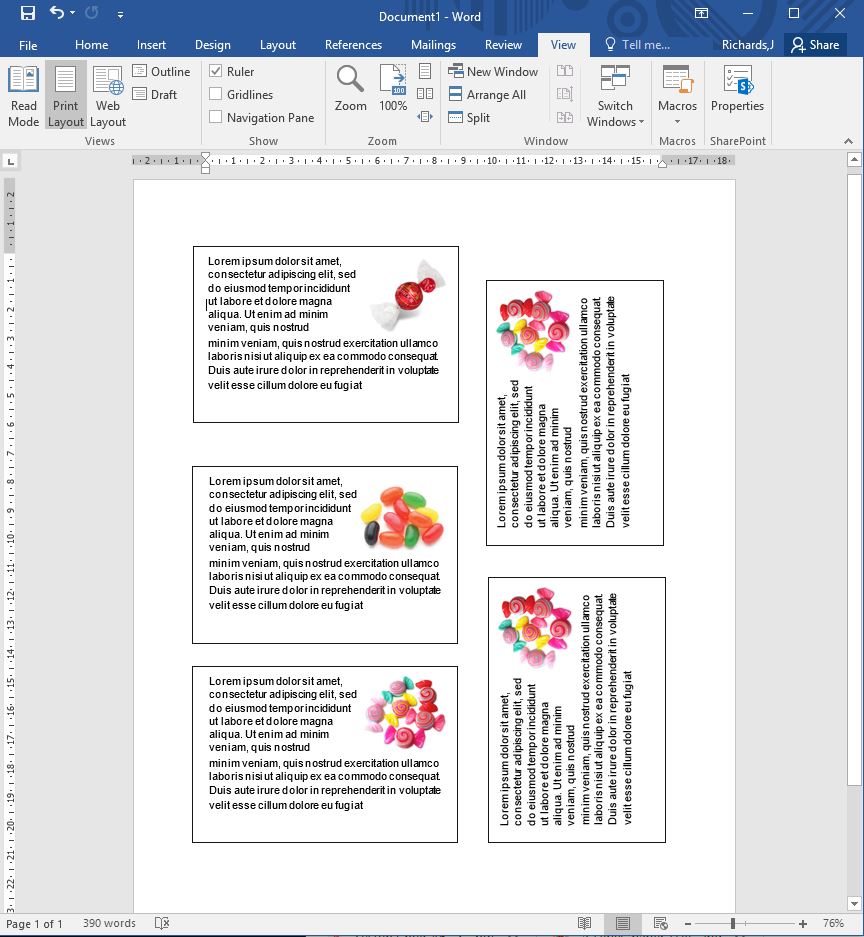
What you could ask for is 20 A7 cards. (A7 is 8 to a sheet of A4. You could have any size card, as long as it multiples into an A4 page)
So, we set one Publisher page at the desired size, see below,
Duplicate a master, and create our ~20 different pages.
With Publisher we can then print this on A4 as a stack of sets that can be easily electronically guillotined and banded.
It’s versatile, can look great, and it saves time and paper**.
You end up with multiple batches (quantity per sheet) of the set of ~20.


Don’t fret – send me the content, and given time I can create the .Pub doc for you. Just don’t spend your time in Word†, or heaven forbid Powerpoint†, trying to make it look nice.

If you need them – there are few Publisher “cards” and “label” template documents for you to download here:

https://www.dropbox.com/sh/jkg2mjv3we5u59b/AAB6LXvedE3LjTjoD8cA6QTOa?dl=0


*Horror, Yes, Publisher! When I first was prompted to use publisher, because the situation didn’t warrant the cost of the more professional options, I was horrified. For starters, its Microsoft, but my preconceptions about MS turned out to be a tad misplaced. Secondly, it initially looks like you’re using a child’s toy. But get over it! It’s a very versatile tool for simple multiple-page publishing needs. Projects can even look qood, if you use design elements created in Photoshop and Illustrator etc.
†Word is a word processing program. PowerPoint is for creating screen presentations.
**I the long-term, planning economically and productively can save an institution £1000s

Categories
Uncategorized

Splitting a PDF landscape spread into two portrait pages

Splitting a PDF landscape single double-page spread into two portrait pages??

OK this is dull and not relevant unless it’s relevant, but it’s a solution to a problem that once explained is easy; I should have sorted it way before I did!

single double-page spreads

Every now and then I’m sent a PDF for folded booklet printing, that has been created as single page double-page spreads.

This is no good if a printed folded “booklet” is required. It’s been created for viewing on-screen, not imposed for print production. There is no automatic way to print this as a folded booklet as the page/s need to be chopped in half.
There is a relatively easy workaround solution, which involves digitally cropping the pages. 

  1. Create a duplicate of the PDF file.
  2. Open the original file in Acrobat Pro.
  3. Insert the duplicate file at the end: Right-click “Insert,” select “from file”. Select the duplicate file, insert “after”.
  4. Place/move the pages that need cropping into their correct orders, such that you have two in a row for each page (1,1, 2, 2, 3, 3,…)
  5. Select a page to crop and right-click the thumbnail “Crop pages”
  6. On the first page to be cropped, select the left-hand side of the image, by making the right margin half the width. 148mm for half 297mm (Show the ‘Crop Box’)
  7. Set page range for the pages you want to crop, “Apply to” to the “even pages”
  8. Go to the next page to be cropped. This time select the right-hand side of the page, by making the left margin half the width. 
  9. Set page range to “All,” and “apply to” to “odd pages”

This leaves you with single paged PDF that can be printed as a stitched folded booklet if you have a booklet printer/finisher.

Single double-paged spreads to single pages.

Reprographics – there’s always a way…


Categories
Uncategorized

Posters, Flyers – there’s life outside the web.

Posters, Flyers – there is life outside of the web. And the key thing is that ‘life’, can point people towards your shiny new web bling and that thing you just gotta share!

Making people aware of ‘your thing’ is what you need to do.Word of mouth is a great way of getting into people’s heads. Social media is the new digital WOM. Facebook, Twitter and the like offer free channels to promote ‘your stuff’. It’s relatively low-cost but, needs to be done, kept up and worked – the conversation needs to be kept alive.Printed flyers are still a great way of reaching people outside of the limited ‘social media’ culture. But flyers and posters need to be used wisely. Printed flyers can be distributed door to door, shared as magazine inserts, handed out in the street, or shared through friend networks.

The flyer’s big unique feature over social media is its tangible nature and potential longevity. Your customers will physically hold the flyer, you are in their hand, in their kitchen, on their table. Of course, ‘design’ also is key to the impact you can make. The flyer is the signpost to you, your event, your product. It might include incentives, interactive elements, competitions, coupons or vouchers … of course a ‘FREE’ whatever is a great way of encouraging a response.

Waffle. waffle … I think you can see that a good flyer can be worth the relatively low production costs. And it’s simply worthwhile for the invest in good design of the content and the visuals.

You can see some projects I have helped with here: jules p richards