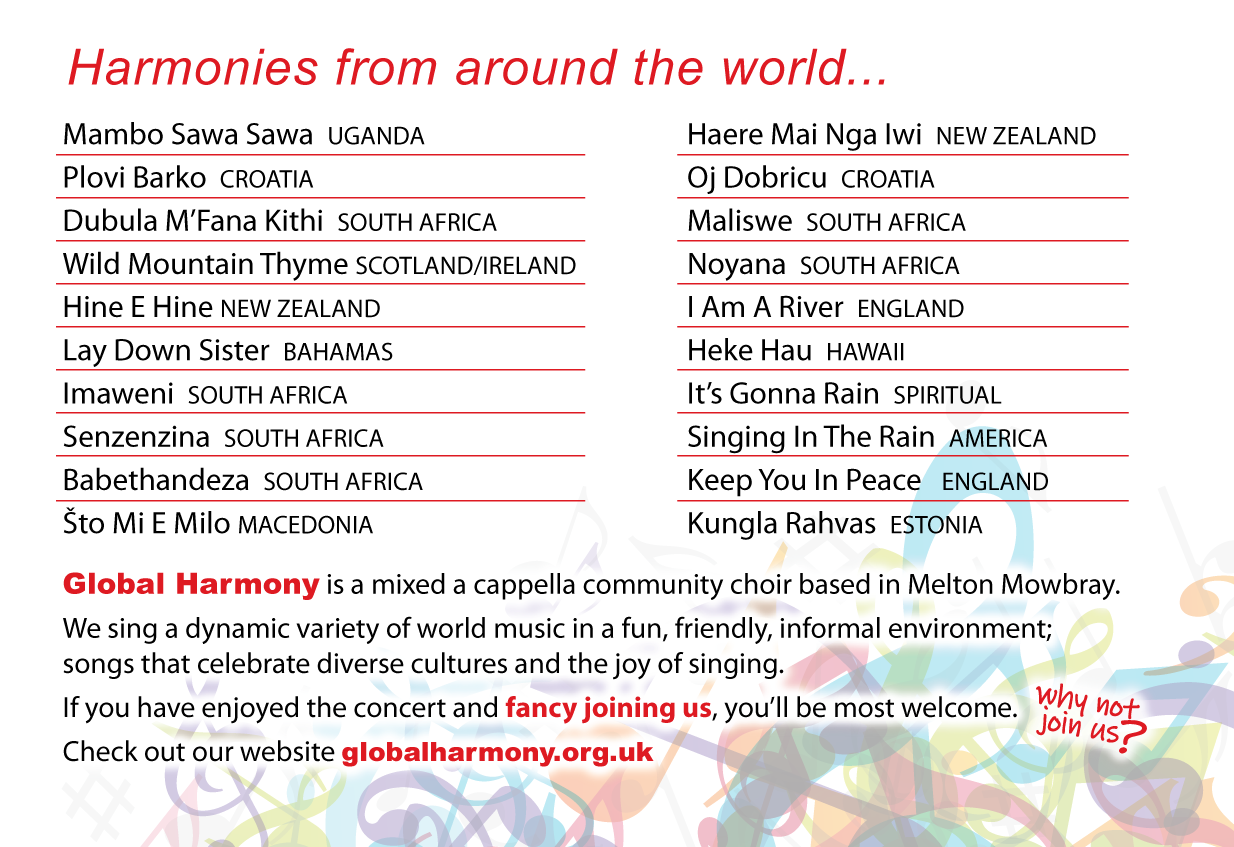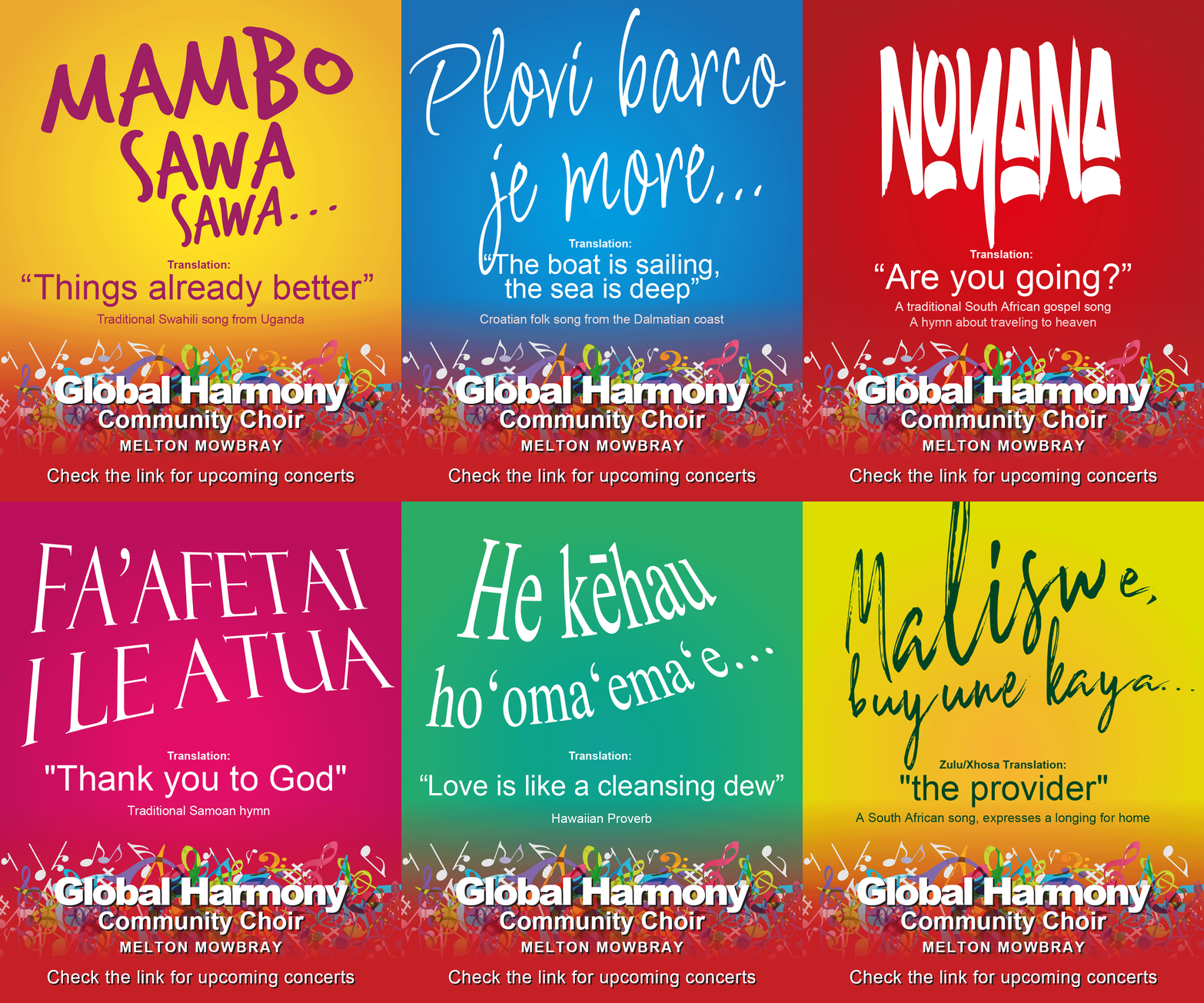
And if you’re free, Global Harmony, has a concert, this Friday 26th June in Melton!
But, it’s not all about the performance; it’s about the act of singing together. The whole thing’s bigger than the sum of its parts. Singing with these fine folk is a privilege.
Global Harmony choir sings a dynamic variety of world music in a fun, friendly, informal environment; songs that celebrate diverse cultures and the joy of singing. Exciting rhythms of Africa, stirring Eastern European harmonies, songs from around the world. More here: www.globalharmony.org.uk
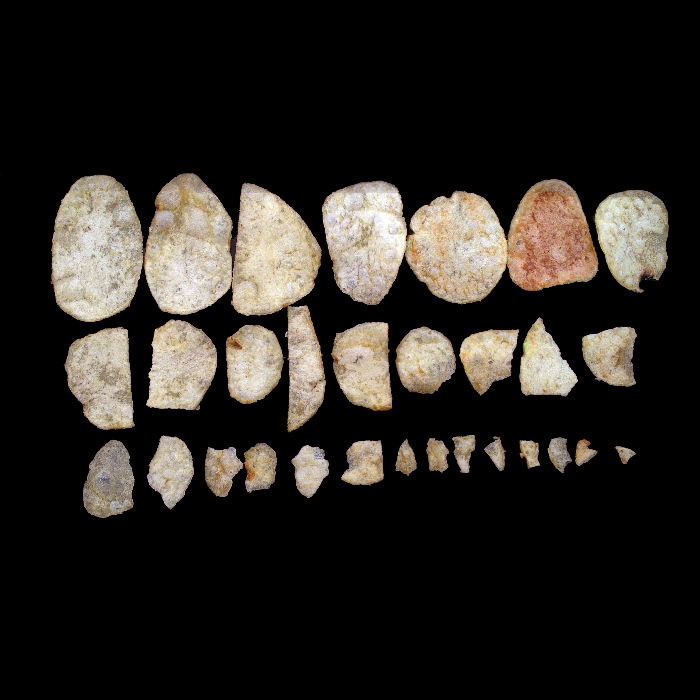
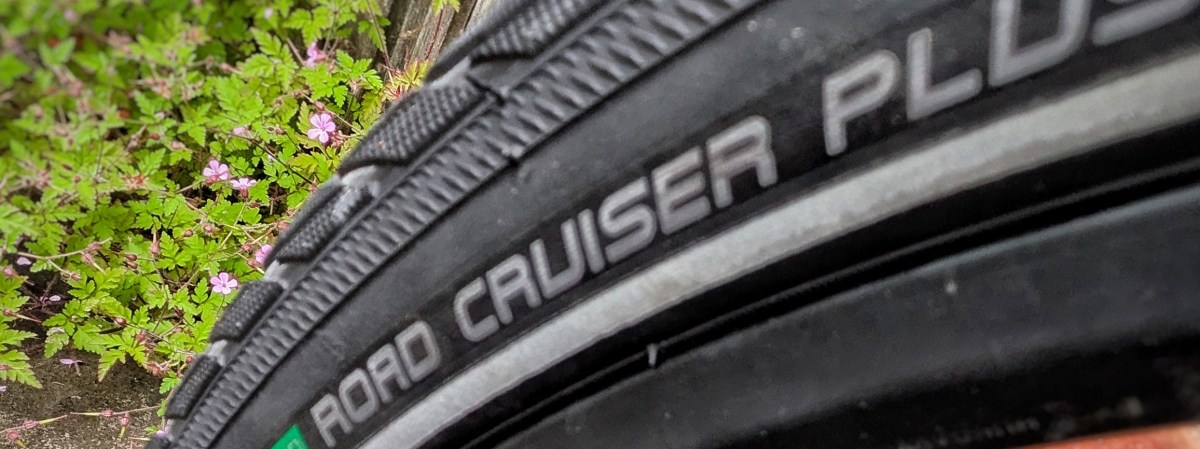
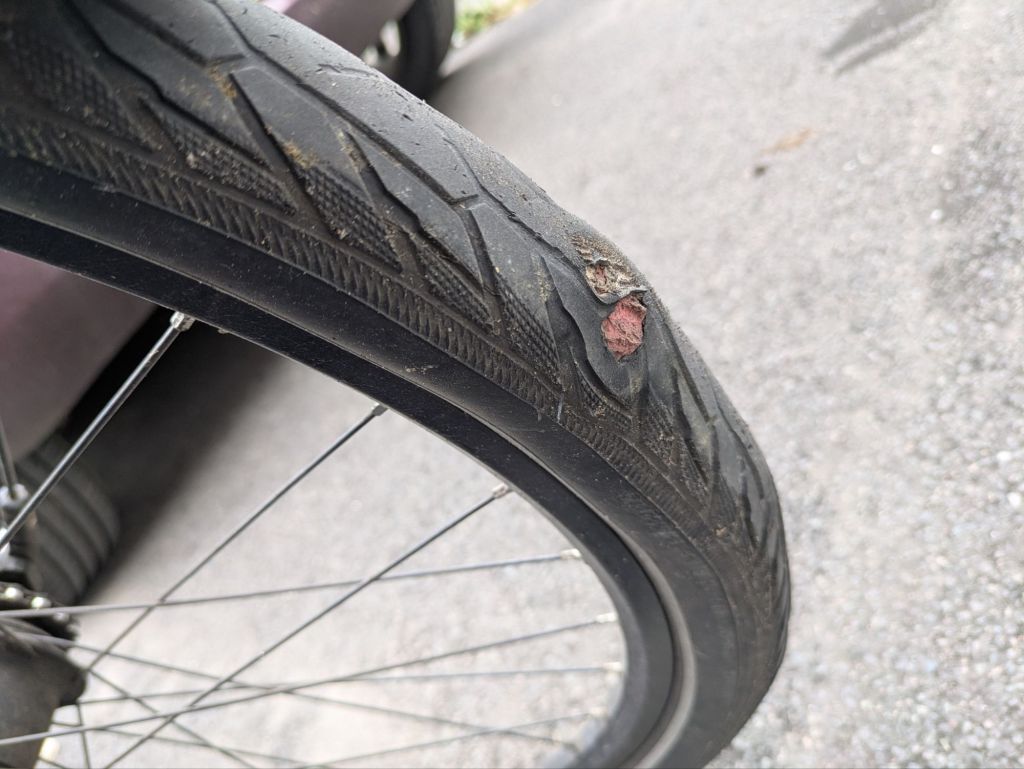
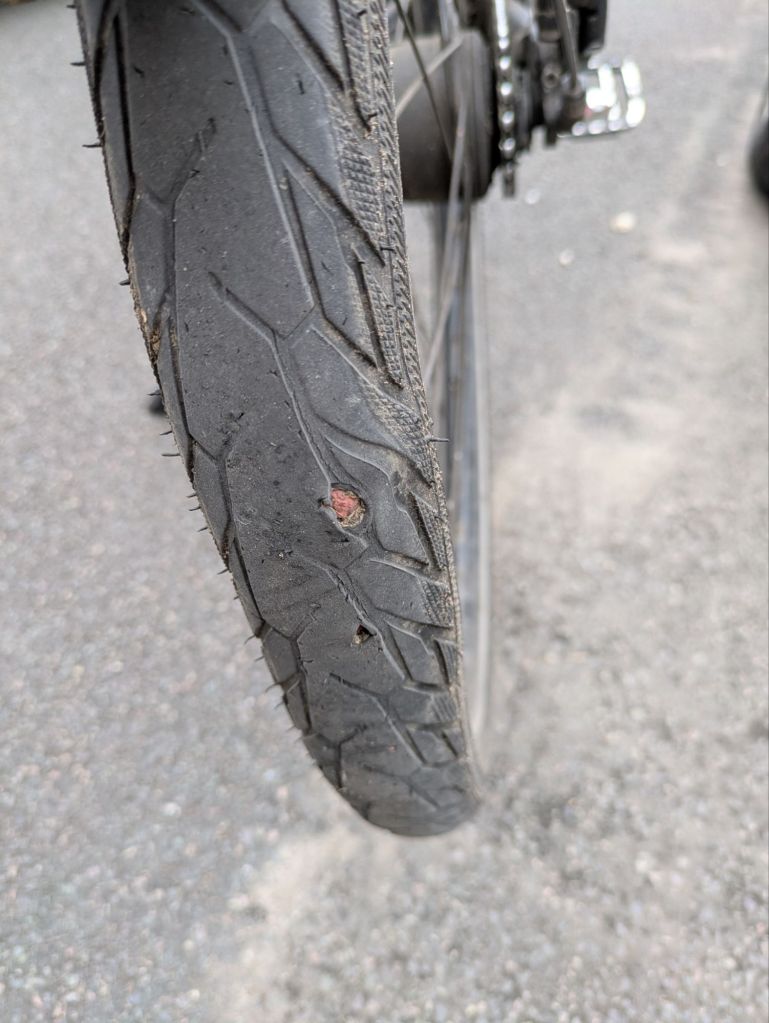
So my tyres have given up after ~10,000 miles! That’s a tad over their expected ~5000 miles estimate. But take a look, I have ridden them to the limit!
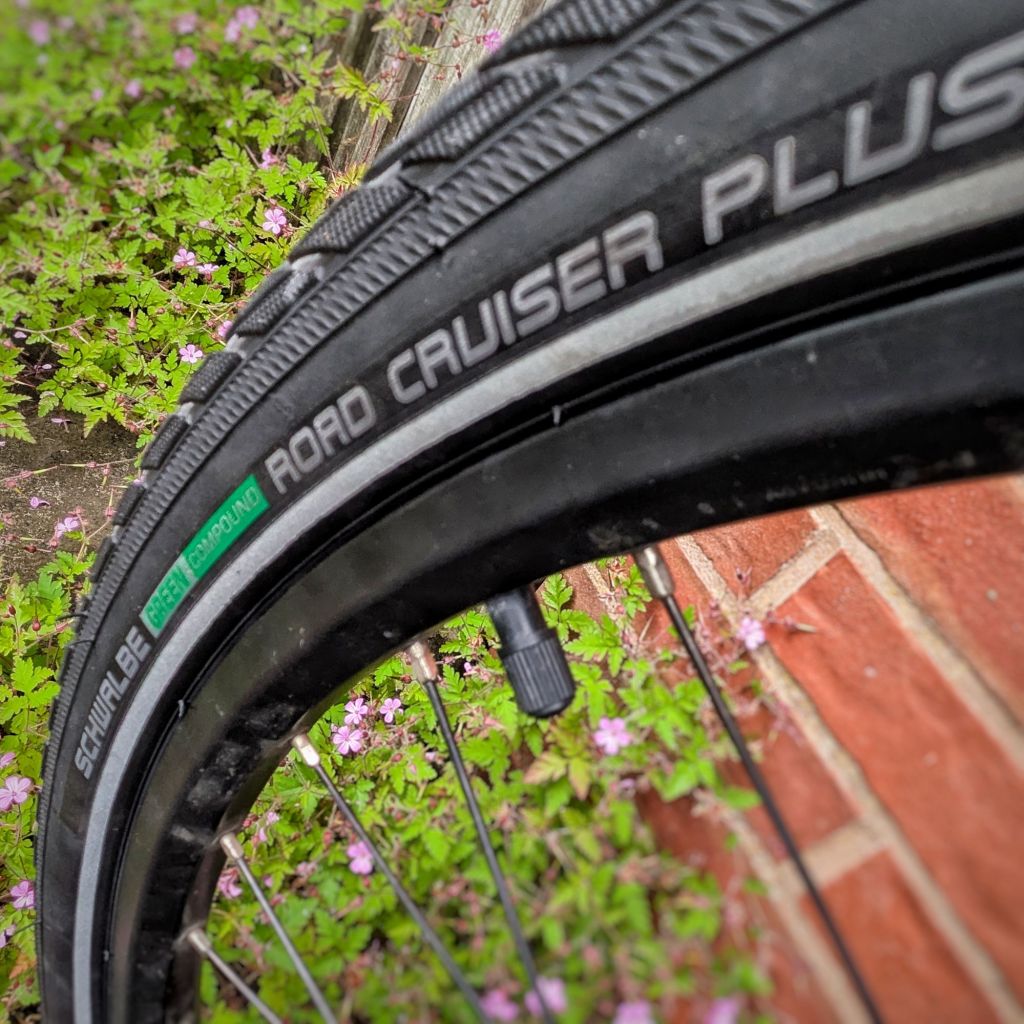
The Schwalbe Road Cruiser Plus lists as “a highly durable, eco-friendly commuter and hybrid tyre”
Green Compound, uses renewable and recycled raw materials without compromising on quality
Puncture Protection: Features a 3 mm thick TwinSkin: An additional rubber coating on the sidewalls to protect against unsightly cuts.
They are lighter, and cheaper, than the top of the range Marathon Plus.
These tyres have lasted me 3.3years – that’s almost 10,000 miles.
New shoes…
Schwalbe Road Cruiser Plus
I ride 75 miles a week. 41 weeks/year, that’s ~3000miles/year. My cycle.
It’s worth mentioning that for the last few years, I have used Tannus Armour inside my tyres. They have served me very well. Only one puncture in 2 years, from an award-winning shard of glass. The Armour will be refitted inside my new tyres.
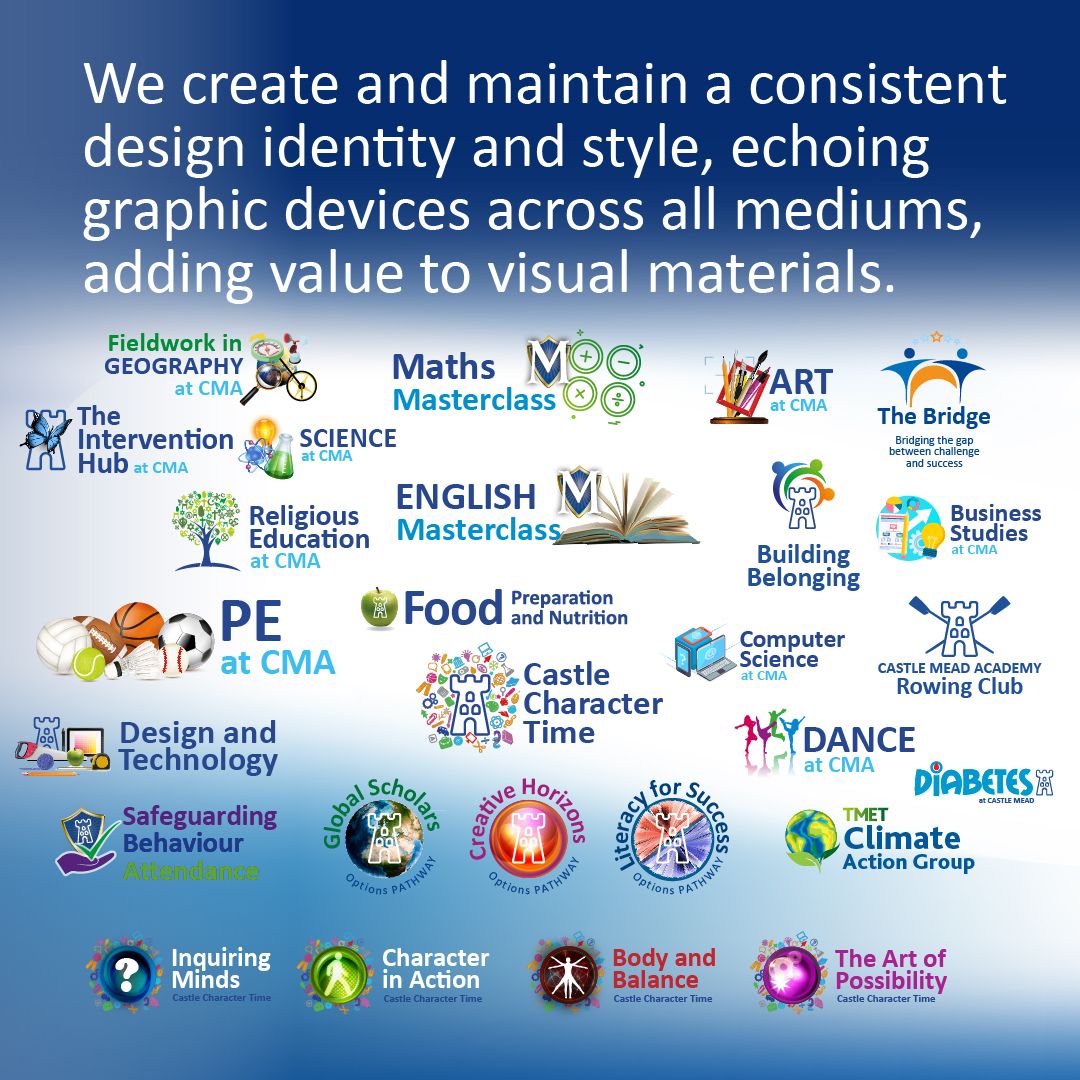
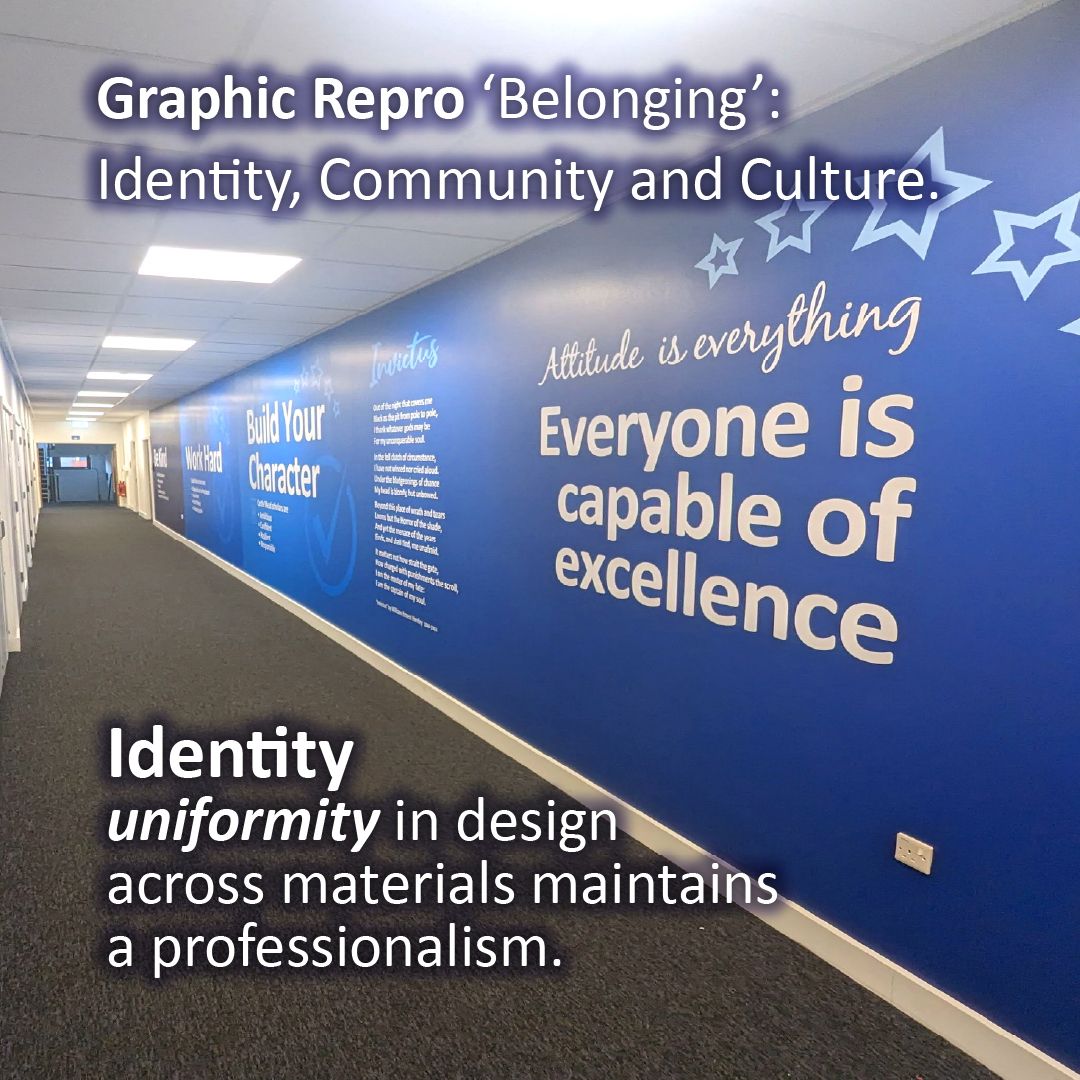
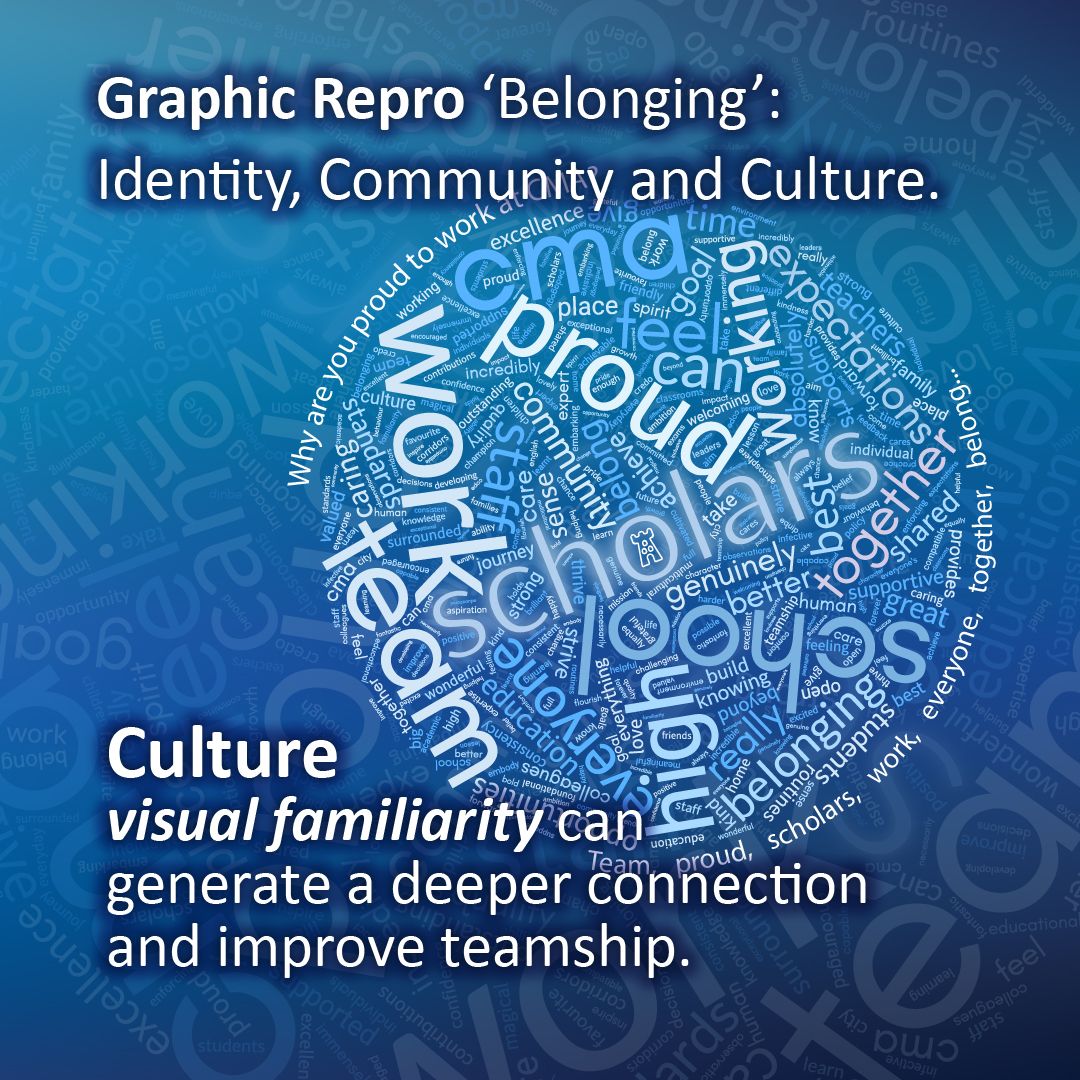
Print is important. The format of what we print is important. How it’s graphically designed and reproduced can add value(BPIF Stats).
However, over time, print costs to large organisations can be significant.
In a large organisation, if we all just printed a tad more thoughtfully, we could save thousands over a year.
Print in black & white.
Printing in colour costs ~10 times that of printing in mono.
If 100 colour clicks = £10*, then 100 mono clicks = ~£1 (plus the cost of paper etc)
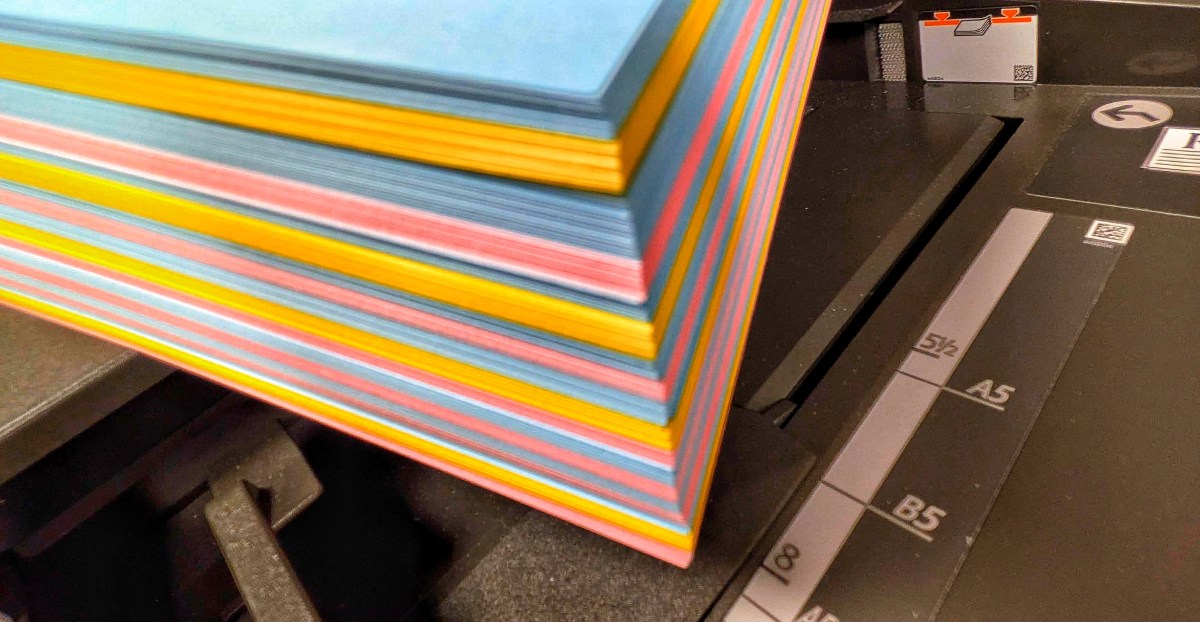
If you need a bit of bling, then mono print on coloured paper is still cheaper than colour print.
Print smaller, half your costs!
Printing your page as two pages per A4 page, or an A5 booklet can reduce paper and print costs even further! For example, print as multiple pages/slides per page if possible. Just ask for it as two or even four per A4 page, or an A5 booklet.
If 100 A4 clicks = £10* then 50 A4 clicks (2 per page) = £5 (plus the cost of paper etc)
Try to think about costs. Where possible, make it mono and seek to use paper economically.
*Any prices shown are just for illustration.
Another thing worth considering…
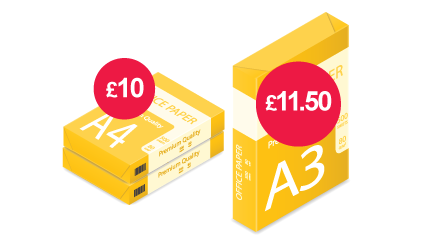
A4 rather than A3 paper.
A pack of A3 paper costs >15% more than two packs of A4 paper**.
While A3 folded to A4 booklets;
are useful to emulate actual exam booklets,
can keep work bound better (up to 80pages/sides at a push)
Arguably,
A4 sheets are easier to open/mark for general use, and more importantly cost less.
So, if A4 stapled will be sufficient, please DON’T ask for folded booklets. Is A4 stapled top left, or A4 two-stapled sufficient? (Remember, folded booklets need to be a multiple of 4 pages, 10 pages as a booklet, has 2 blank sides.)
**Market Demand: Because A4 is the standard size for everyday printing, it is mass-produced at higher volumes. A3 is used less frequently, meaning economies of scale slightly favour A4 pricing when purchasing in bulk.Suppliers purchase such large quantities of A4 from the mill, negotiating substantially better pricing, spreading costs across a larger volume of stock. A3 demand is much lower, the mill does not achieve the same production efficiencies, and suppliers don’t have such purchasing power. So, unit cost for A3 remains noticeably higher.
However, at the end of each term, ”Global Harmony,” the choir I sing with, compiles a concert, and it’s always a very enjoyable event. We’ve got one coming up in June!
26th June Melton Mowbray
But, it’s not all about the performance; it’s about the act of singing together. The whole thing’s bigger than the sum of its parts. Singing with these fine folk is a privilege.
Global Harmony choir sings a dynamic variety of world music in a fun, friendly, informal environment; songs that celebrate diverse cultures and the joy of singing. Exciting rhythms of Africa, stirring Eastern European harmonies, songs from around the world.
I started singing with Global Harmony in 2008! They are an a cappella community choir that aims to sing truly from the heart, and as such, they don’t use sheet music in practice or performance. See Natural Voice Network for more info – as they say, “celebrating the voice you were born with, rather than trying to train it to an ideal of perfection”.
The act of singing releases endorphins, the brain’s ‘feel-good’ chemicals. Singing in front of and essentially with others can be even more rewarding.
Singing is arguably a primal action, to express oneself in song – pre-language. It could be said that habitual structured language might even inhibit essential expression, feeling, thought, and being.
Singing requires deeper breathing. Singing can have some of the same effects as exercise. It’s an aerobic activity: more oxygen into the blood, better circulation, and helps with a “good” mood.
Many studies have found that after people take part in singing, over time, there are significant decreases in both anxiety and depression levels, and that habitual singers find that singing plays a central role in their psychological health. Singing requires attention; it’s hard to worry about work or money or family problems when you’re actively engaged in singing.
The pre-language primal song, of course, was a group social activity – the war chant, the rain dance, singing down the mine, cries from the plantation, the pub singalong, traditional church singing, celebrations, “happy birthday to you” – realisation that you are one of a group, identification, belonging, sharing…
Anyway, I’ve started to waffle!
Perhaps you might come along and join us on one Monday night? You’d be very welcome!
Or come along and experience a performance – as I say, there are two performances in June!
The depth of the energy that the sunlight has brought…
Not just the vibrant contrasting colours of the spring, scintillated by seed and the sparkle of sunglint, but also the strength of the tradition in the pinnacled church tower as its bells strike twelve… The god-given energy seemed to make some simple, homely treasures sparkle.
In the heat of the spring sun, the lyrics “hypnotised by the beauty of it all” come to mind. Lyrics from the Hothouse Flowers song ‘Good for You,’ from their album ‘Home’.
My ‘home’ is something I’ve struggled to pin a flag on. I am from Cornwall, so I might say I’m a Cornishman; the Cornish have a strong tradition and identity. But, I have ‘lived’ outside the County, in the East Midlands, for more than 30 years.
This weekend, shadows of the lingering winter seemed to be warmed by a few days of strong sun. ‘Were you there when the sun refused to shine?’ It seems I tend to suffer from an introvert’s ruminations and cognitive distortion, especially in the winter months. A recent health check suggested I was low in Vit D and Iron… that notion didn’t help my ‘perception’ of the world.
The Hot House Flowers sing;
“I’ve hoarded all experiences I’ve had Written down all memories on a train… And you ask me why I’m singing, Well it is good for me, it can be good for you…”
“World is decay, life is perception”, said the ancient Greek philosopher Democritus. But this weekend’s light and warmth have definitely helped my perceptions sing, and helped me treasure some simple blessings.
‘Blessings’. The word always reminds me of being a boy, about 6 years old, circa 1975. Waist-high amidst a throng of Cornish faithful, singing with gusto in the upstairs chapel of the Royal National Mission to Deep Sea Fishermen in Newlyn. “Count your blessings, name them one by one…”. The RNMDSF; fishermen’s shadows in corners, a snooker table taller than me, plaques, awards, and a sense of refuge. I recall songs about anchors, safe return, loss, toil and light. The sound of my grandmother and the colour and spirit of this song.
Abbey Park, Leicester, UK
The Hot House Flowers sang “I’ve spent my life watching sky and sea change colour…”
It’s what we do, colours change… perhaps ‘home’ is where the heart is. But, “where your treasure is, there your heart will be also.” Matthew 6:21
“And I’ve woken to the sound of sweet dawn music Where a hundred thousand songs are sung While the earth and ocean changes Four thousand million into one”
Treasure your blessings. ‘Life’ is in perception!
God, I needed that. Thank you.
Incidentally, my kids bought me tickets to see the Hot House Flowers in Birmingham last year! Awsome.
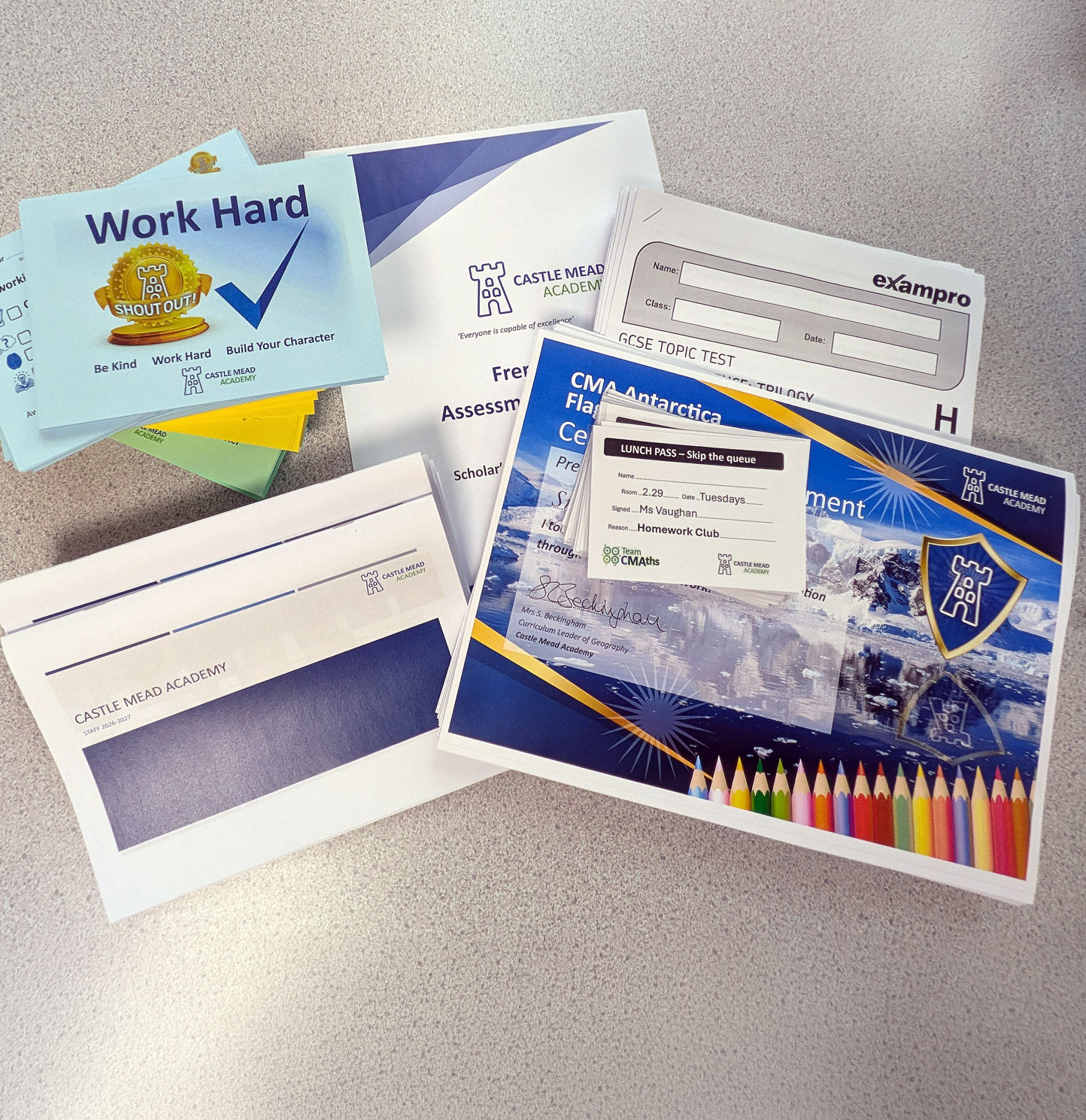
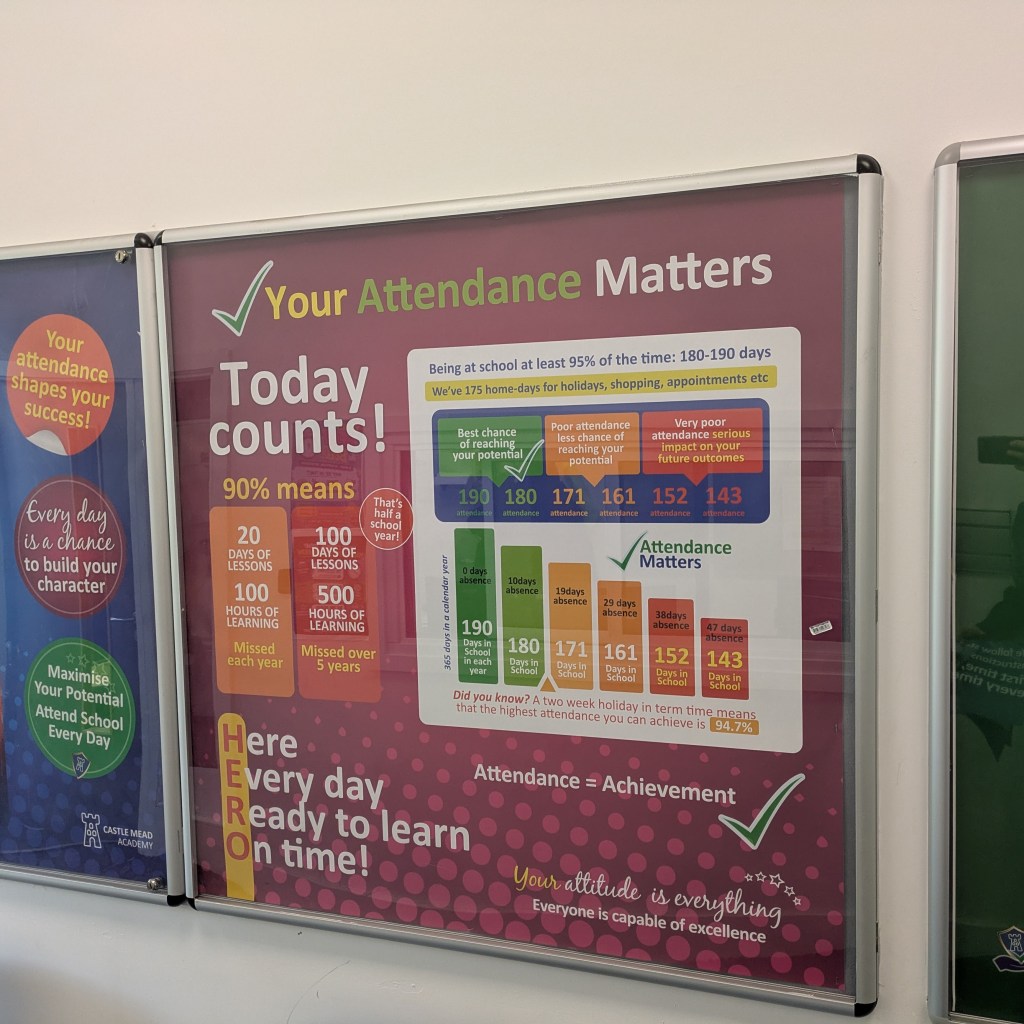
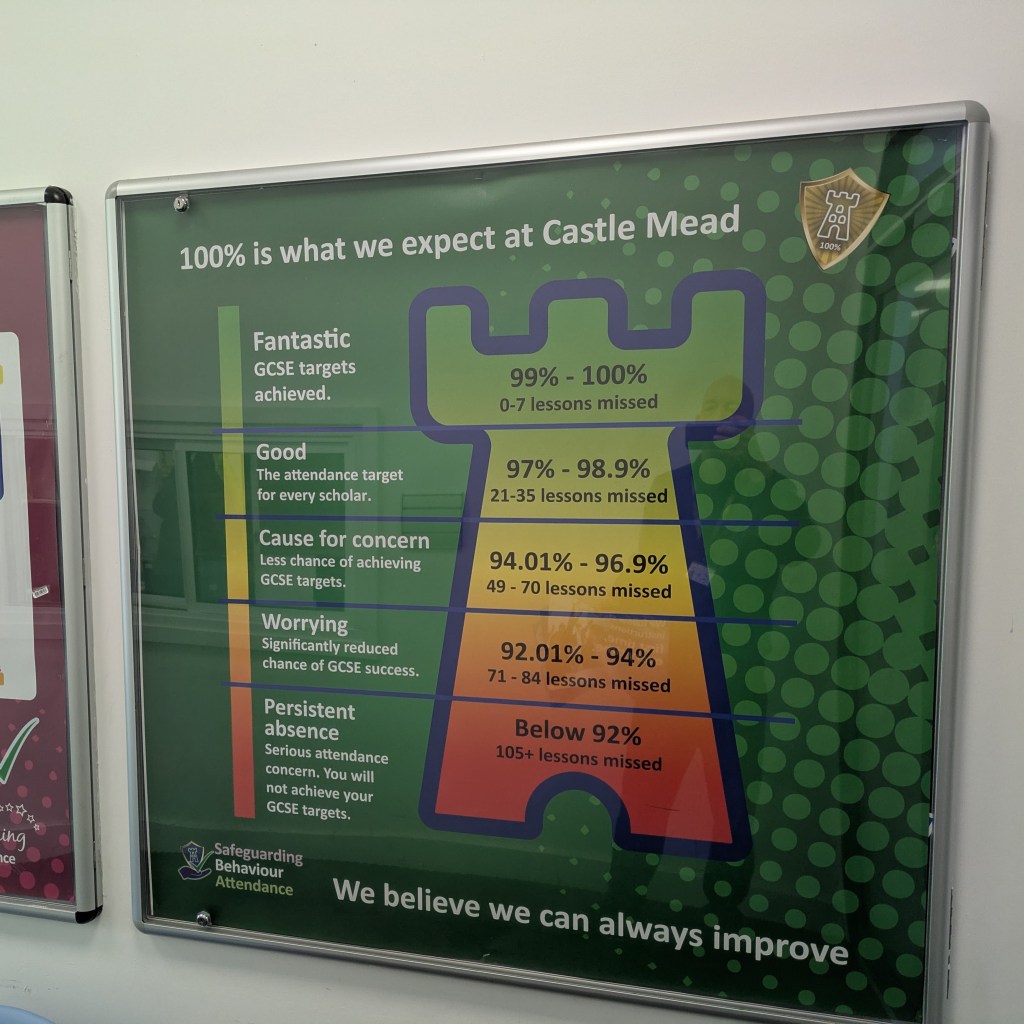
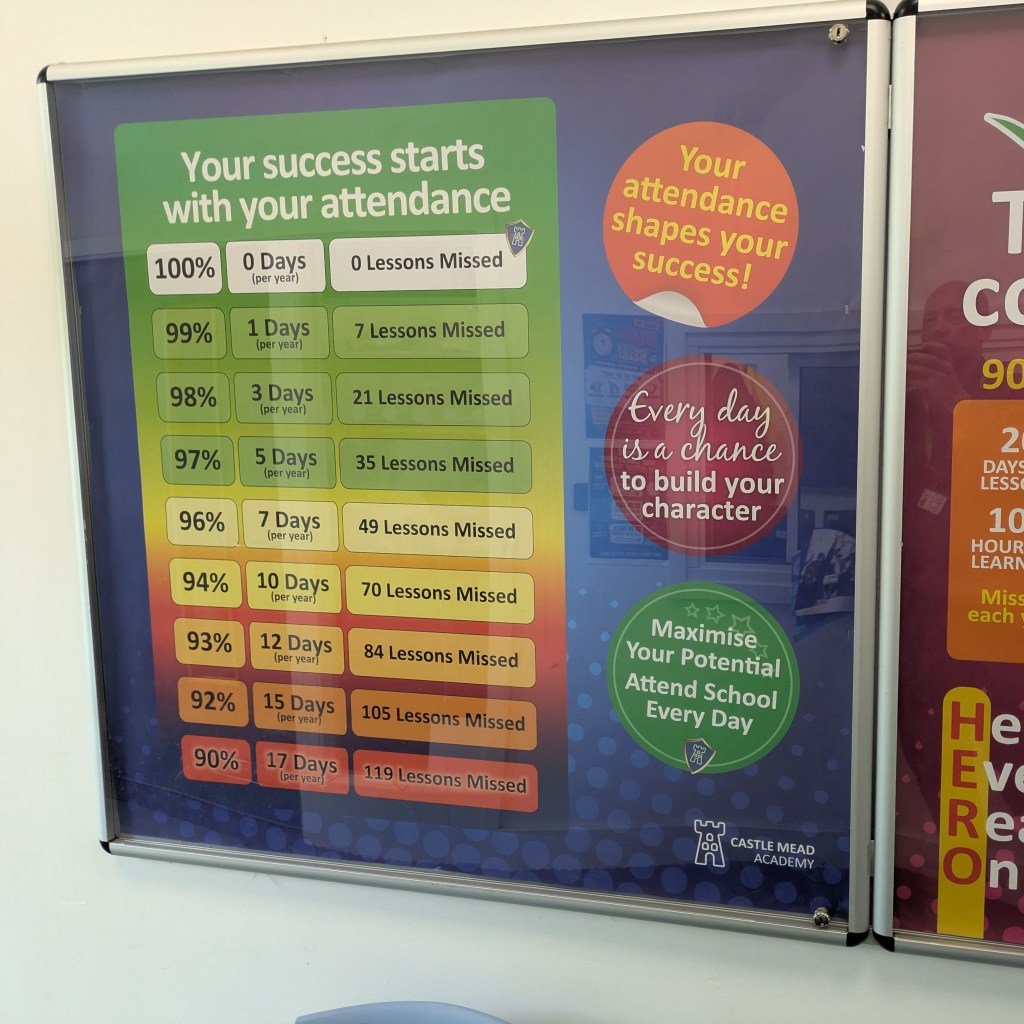
My usual daily activity, ‘graphic repro’, in secondary school, sees me juggling quantities and deadlines, and is quite reliant on certainties* and specifics. Design new branded pages for page 1-7, change all the words ‘cheese’ to say ‘chocolate’ on page 21, replace questions 4-7 with the attached, and produce 10 sets of 33, A3 folded to A4 saddle-stitched booklets, delivered to Room 2.12, for 5pm tomorrow. It’s good to have a break from the certainties. *Having said that sometimes a little mind reading is required #YouKnowWhoYouAre 😁 It’s all good.
I’ve recently read a few good books, and we’ve also seen a few good films. The stories drew me into their worlds, their characters, their relationships and emotions. Things resonated, and maybe caused perceptions to shift a tad.
Three sea fairies shed their wings …
It is said ‘To tell a story is to cast a spell…’.
“go, said the bird: human kind cannot bear very much reality.” T.S. Eliot
We all love a bit of certainty, where would we be without it?
It’s been said before, we seek patterns, routines, shapes, forms, to make meaning from the ambiguity around us. Spells. Just words will do. Two words will form an idea. A harmony and a rhythm will shape a feeling. “April, in Paris, they said nothing, but ascended, pivoted, and pirouetted… with minds and hearts full…”
Yet… the ever-present ideas, tintinnabuli, reverberating in our consciousness are rarely enough, the resolutions are just glimpses of certainty… we do need to make space for the ambiguous gaps in between, the pauses, the still points, the unsignified, the reality.
To quote a line from a recent film, “serenity is something you get when you stop wishing…” ‘Sound of Metal’ 2019
And a line from a recent book, “His decision to live small made him larger than life.” ’Theo of Golden’ by Allen Levi
Ancient texts say, “the young will have visions and the old will dream dreams.”
I recently had a vivid dream about the old days; days before Canva*(argh!), before Adobe CC, before QuarkXP, before Pagemaker, before desktop publishing, yes, before computers! Back when I trained as a print studio artworker, we did it all with a scalpel and hot wax.
In the ’80s, lick-n-stick was the phrase that described what we did. Using hot wax, we compiled type and graphics on art-boards, juggling scalpels, type-gauges and temperamental typesetters, we spec’ed photo transparencies, and mastered PMT.
We measured in picas and ems. We specified every item needed on the page before it was realised. It was all created in black and white, and CMYK & Spots were specified via overlay. I recall repetitive photo-mechanical transfer in the dark room, the stress of pleasing Gina and Linda, the typesetters, or making do with insufficient Letraset. Ah… Poppl Exquisit, it’s all coming back to me!
There was an art to pleasing the pre-press print planning department. Who dared to ask KT and his sunshine band of planners to compile a dozen vignettes or graduated tints? Dare we ask him for a 85% tint? “Bloody 80 or 90 will bloodywell do ya boy!” Ah, what fun.
I remember the apprehension and nerves as we ventured into the Creative Director’s lair, expecting our labour of love to be discarded with a mumbled comment about the “Seven Sacred Principles of Design”. Spectrum Design and Print, St. Ives; they were good times.
1980s Spectrum Design & Print, St Ives, Cornwall.
This was all before desktop publishing as we know it. The only computers in the building were in accounts and the typsetters.
A lot has happened since then. I emigrated from Cornwall to England and discovered creative jouissance, post-modernism, and ‘The Lodge’ in Alsager, Manchester Metropolitan University’s country playground. I graduated in 1995, I moved to Leicestershire, and life took over.
Since then, we’ve been through Aldus Pagemaker, QuarkXPress, Adobe AI, ID, PS, etc, Creative Cloud in its many forms, and horrifically, we now see the delights of Canva*.
It was a more physical analog time. I greatly value learning about the essence of it all before computers took over and automated things.
The skilled jobs between the print designer and the lithographer are now extinct. I fondly remember; Designer* Cathal, Artworker Tim, Typesetter Gina, Proofreader Brian, Film-separation Karl, Platemaking Ken… all can now be ‘done’ by anyone, on their phones. *Unfortunately, you really can tell when the ‘design’ step has been automated.
In 2016, I moved from working directly in the print/publicity industry to working in secondary schools in Leicestershire. It’s been 10 years, I’m 57 years old, I’m still learning, and dreaming.
I commented online recently about a grievous sad event that happened in Leicester: “…I hope warmth and compassion can be found as well as strong, effective leadership that might affect attitudes and behaviours of young people in our community…”
‘Compassion’ is a word/idea that specifically resonated with me a few years ago. I can’t remember what I was reading, possibly ‘Humankind’ by Rutger Bregman, but it has lingered subliminally since.
Real compassion is not necessarily easy to grasp, it’s bigger than just sympathy or empathy; it’s these things plus the motivation to help, a feeling/attitude, that leads to action.
Coincidentally, or perhaps it’s been biding its time, the word has come up again recently at work; We’ve discussed the idea of ‘intentional compassion’ as an underlying attitude for change. Medical scientist Stephen Trzeciak has studied and written about the power of compassion, showing that it is not just a soft skill but a measurable force that can transform outcomes, improve well-being, and create meaningful change. #compassionomics
Six years ago, thinking about career and purpose, I found myself going through an exercise to visualise some reasons for my being (my Ikigai). Surprisingly, what we eventually came up with at that moment was this: “I get up in the morning… to discover and experience commonality and connections so that I can interact with people and the wider world, to help us all feel different…” #workinprogress
Maya Angelou wrote, “…people will never forget how you made them feel.”
There’s an African philosophy called ‘Ubuntu’ “I am what I am because of who we all are”, which emphasizes interconnectedness and humanity; “I am because we are”. It suggests that our identity and well-being are deeply tied to our community, belonging, and a shared humanity.
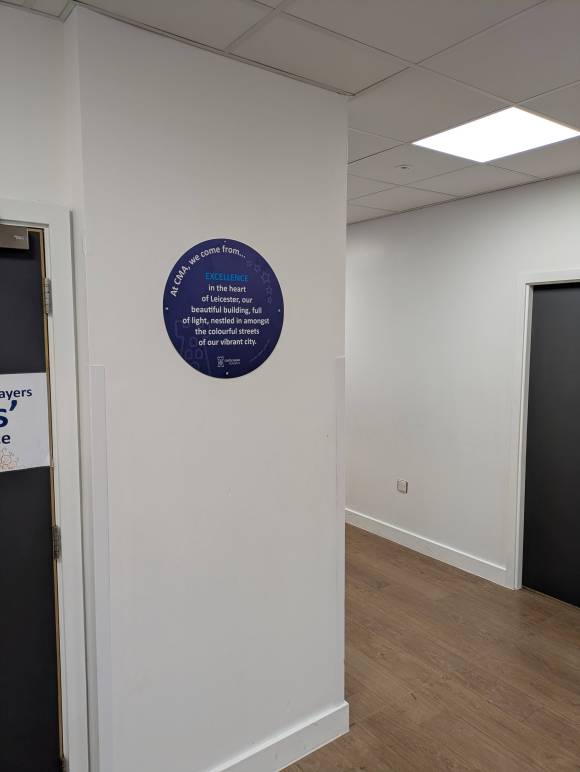
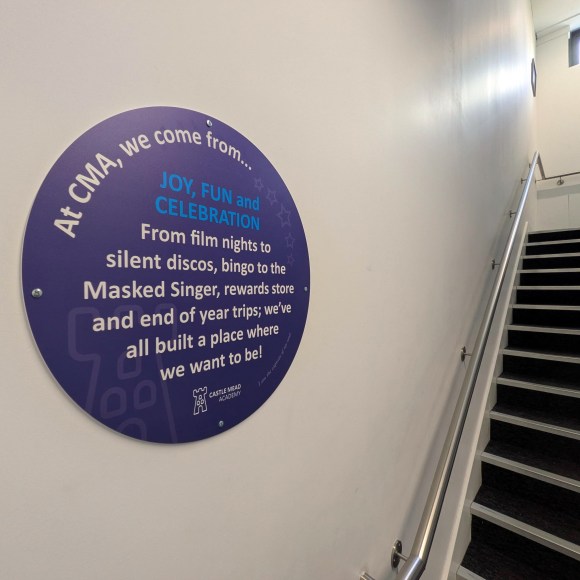
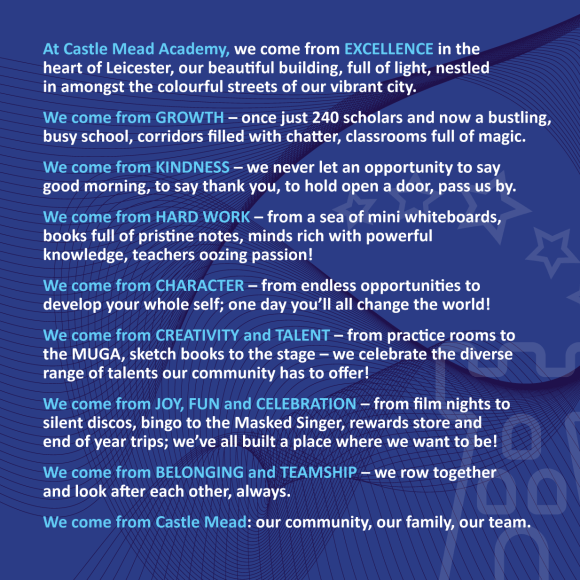
Bewilderingly, I was nominated last year, for my contribution towards our school’s ‘Community’; “Building a sense of belonging in a reflective and stimulating environment. Celebrating care, kindness, and difference, allowing positive relationships to flourish and ensuring communication is excellent.”
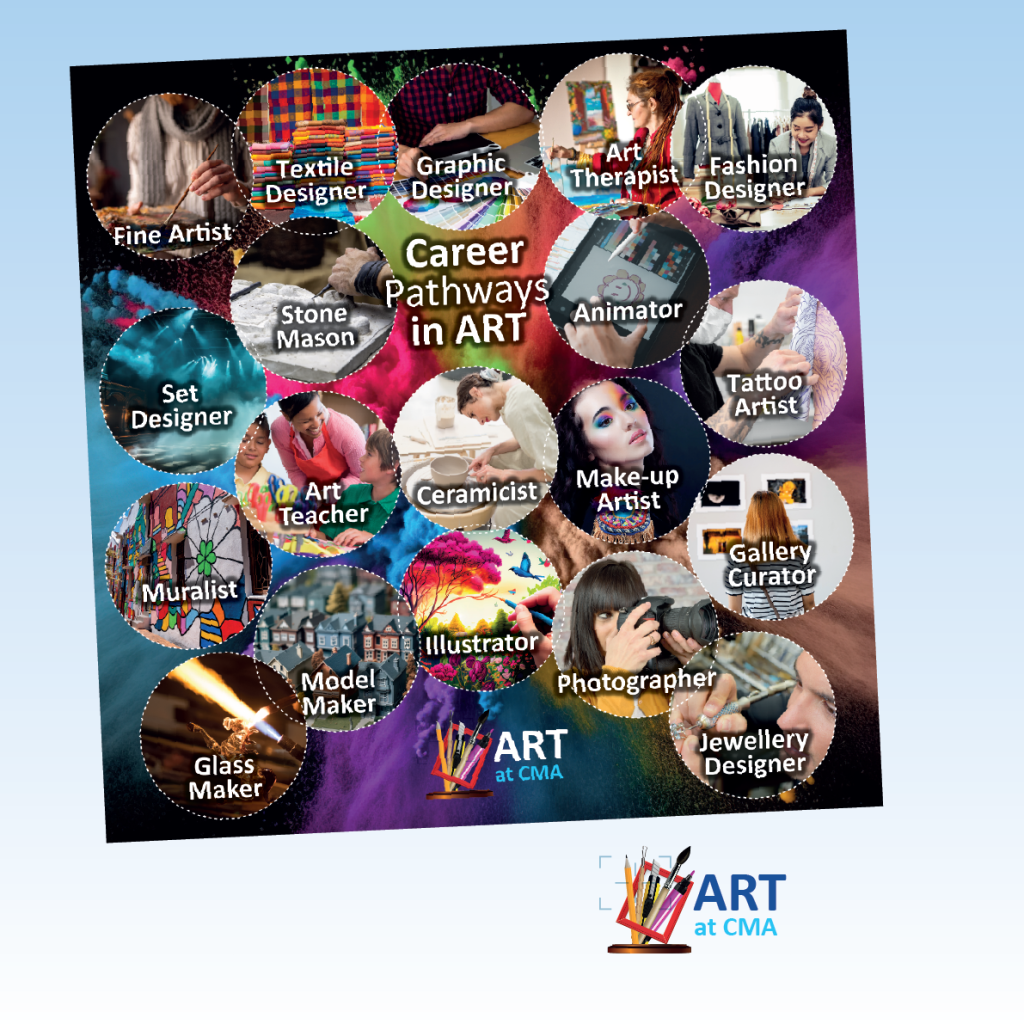
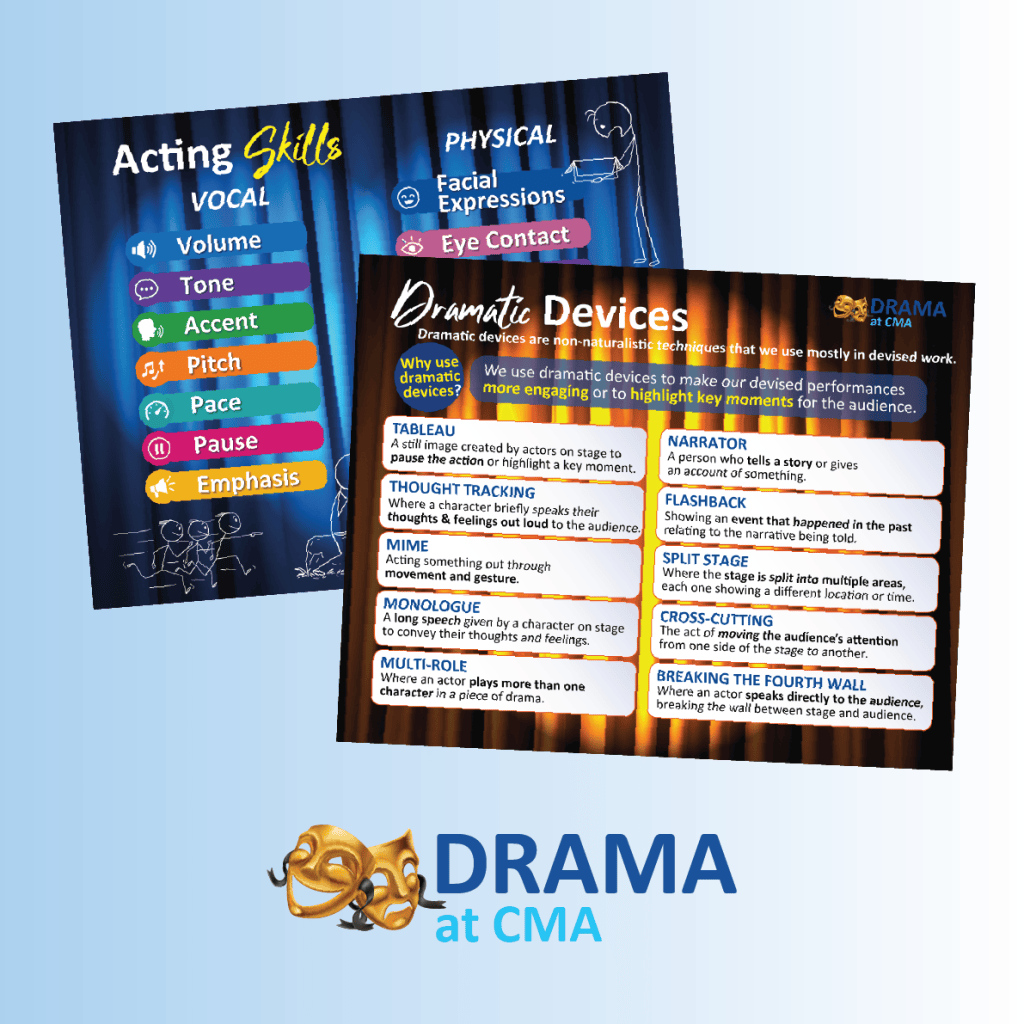
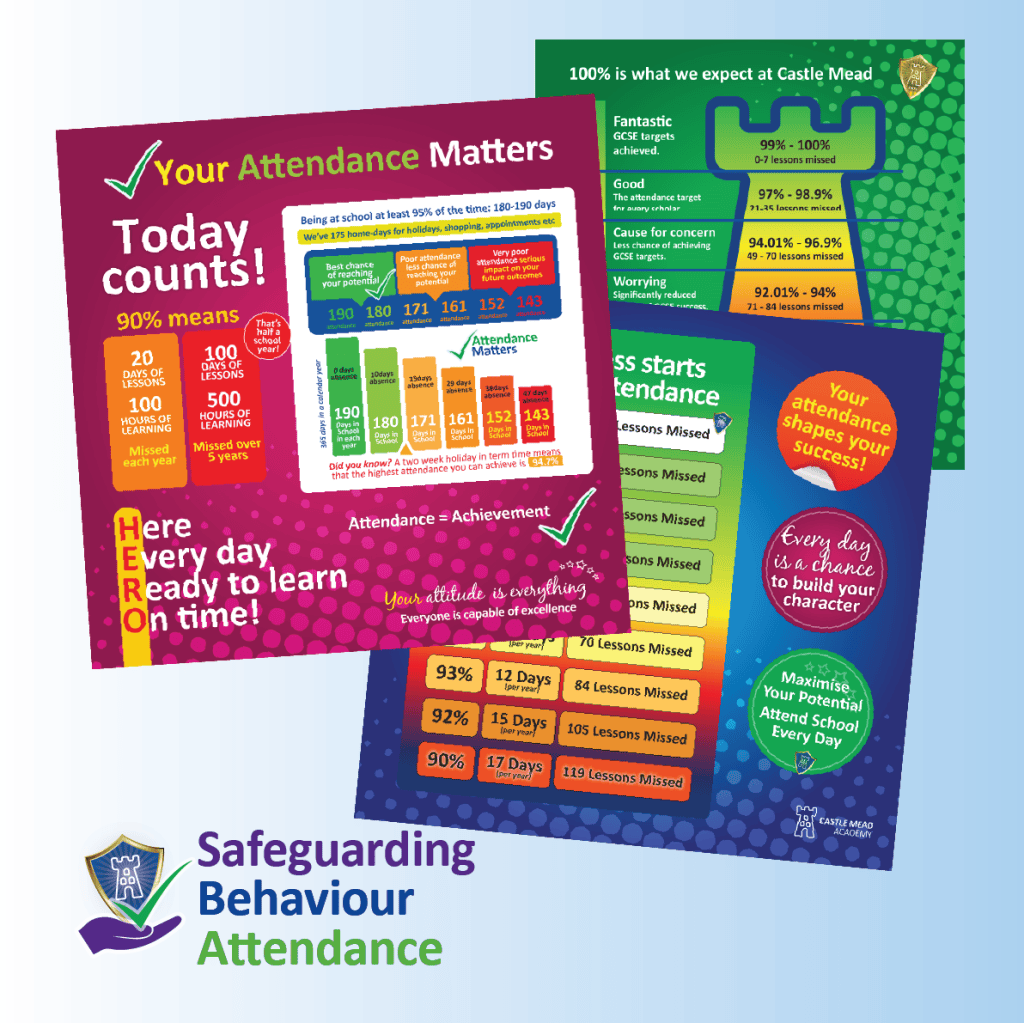
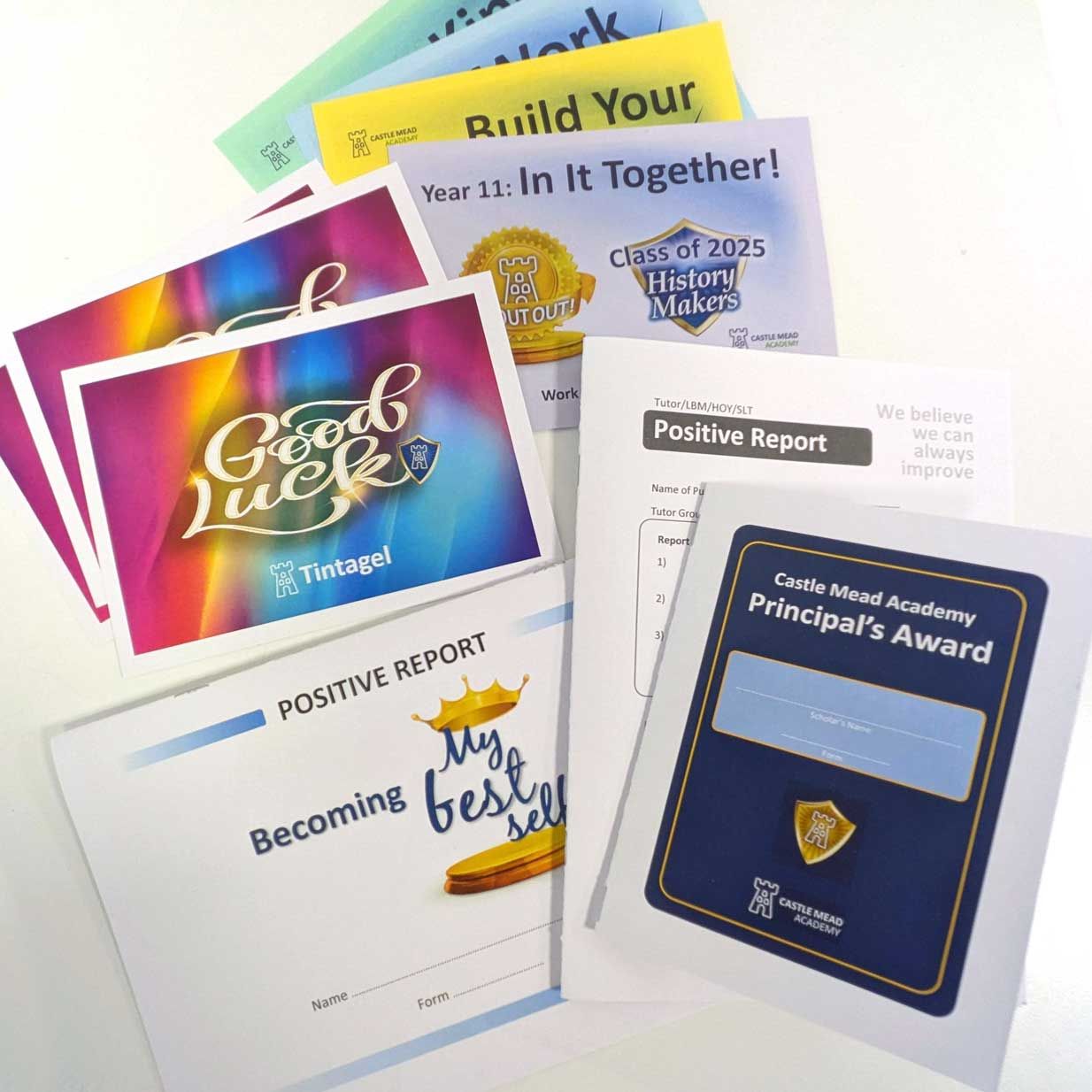
I’m an introvert; community is not my area of expertise. Yes, I’m good at visual communication and making graphics work effectively, but as a colleague rightly said, progress “does not happen because of posters… but more specifically because of intentional, small but meaningful, conversations; human moments” – relationships, habits, belief…
Our community starts at the individual level.
So there’s the challenge; l little bit of intentional compassion… humm?