The Sans Day Carol or St Day Carol is a traditional Cornish carol from the village of St Day in the mining area near Redruth.
I’m a Camborne boy but as many Camborne boys did (those that didn’t aim as high as Truro) spent a deal of teenaged time in the Redruth area. Ah… happy daze. Never did a Christmas pass without hearing this tune, among other Cornish chestnuts, being sung somewhere.
Not that I know much about it, but the original Cornish words for this song fell from use. A renewed interest in the Cornish language has seen the cornish words somewhat revived.
Rather like the Holly ‘something’ lives on…
Going through the annual stages of the berry’s colours? Birth “white as the milk”, energetically vibrantly “green as the grass”, humanly physically “blood-red” and deeply deadly “black as the coal”…
What is ‘it’ I wonder, much more than a jingly crimbly festive cheer…
Long live the holly!
Now the holly bears a berry as white as the milk, And Mary bore Jesus all wrapped up in silk.
And Mary bore Jesus, a saviour for to be, And the first tree in the greenwood it was the holly
Holly, holly, And the first tree in the greenwood it was the holly
Now the holly bears a berry as green as the grass, And Mary she bore Jesus who died on a cross.
Now the holly bears a berry as blood it is red, And Mary bore Jesus who rose? from the dead.
Now the holly bears a berry as black as the coal, And Mary bore Jesus who died for us all.
Cornish chorus: forgive my ignorance but it’s sumt’ like this
Ha Mam o an Maghteth, Marya Mam Dew, Ha gwedhen an gwella, an gelynen yu
Kelyn, Kelyn, Ha gwedhen an gwella an gelynen yu.
I’ve always had cause to reconsider my experience of growing up in Cornwall – you can take the boy out of the county but not the county out of the boy etc… yadda yadda.
I have always failed to summarise this essential attitude that seems to pervade much of the Cornish being – previously, the best I could come up with is a curious ‘contentedness’ with their meagre lot. A brash humility, not necessarily humble contentment, but a brackish contentedness… a rough softness… a sugary saffron bun on a salty sea wall.
Cornwall is the the second poorest place in the UK. It’s a place of contrasts: with expensive yachts and luxury second homes for Tarquin and Jessica’s summer sojourn, a place of union-jack shorts, Carlsberg nites, plastic buckets and chicken nuggets for Vince and Pat. It’s a place of community eating and religious feasting. It’s a place of craft and art as well as back-of-a-lorry markets. It was a place of place of warm chapels and cold pews. It was my home. It has a deep rich if damp past and an unknown future. Fantastic weather and a harsh climate.
Moving on from ‘contentedness’, I have recently reconsidered the notion of ‘reverence’.
In her book “An Altar in the World”, Barbara Brown Taylor, quotes Paul Woofruff “To forget that you are only human… to think you can act like a god – this is the opposite of reverence” Reverence – a virtue that keeps people from trying to act like gods. Barbara says “While most of us live in a culture that reveres money, reveres power, reveres education and religion, Woodruff argues that true reverence cannot be for anything that human beings can make or manage by ourselves. By definition, he says, reverence is the recognition of something greater than the self – something that is beyond human creation or control, that transcends full human understanding.”
My recollection of the Cornish world-scape recalls a sustaining reverence. The land sea and sky are so much bigger, the engineering and raw-material trades are harsh, the summer sun burns harder and brighter than man’s endeavour.
The Cornish love of music is another essential quality that I have always lived with.
Moving ‘up to England’ and losing touch with a ‘contented reverence’, I similarly found that a love of real music can be lost in the manufactured world that we find ourselves consumed by.
Bjork and David Attenborough recently discussed that essentially “singing is more fundamental to us than speaking”, and notions of the sublime, symmetry, transcendence, simplicity.
Musical expression is essential to human life? Live music, sound, reverberates, resounds, emotion… Song and rhythm agitate energy that can lift and stir…
Can I posit that feeling is more fundamental than thinking?…
The combination of emotional expression and an essential reverence, now there’s a thought.
Bad Weather and Glorious Views (just some foughts)
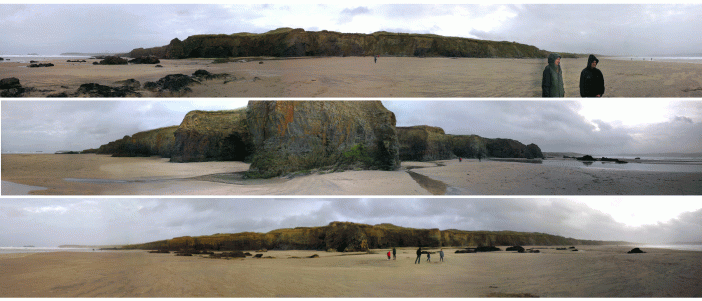
Having lived in West Cornwall until I was twenty something years old, Gwithian/Godreavy Beach in Cornwall is a place I spent many hours as a boy and young person.
Those who know it will probably also consider it a special place.
Carbis (St.Ives) Bay is a unique formation and the stroll along the East edge of the bay from Godreavy around to Hayle is quite an experience.
It’s become a Christmas – New Year tradition to take the stroll if we’re in Kernow seeing the folks etc.
The best time to experience it is without emmets… therefore Autumn through Winter and Spring. It is every-changing, and the extremes from sunbaked bluest of blue days through to the wildest of salty howls can be ‘awesome’ (in traditional sense, not in the youf speak sense).
If you go to West (proper) Cornwall on Holiday, be sure to seek it out.
The waves relentlessly toil, rolling,
the kite struggles with the wind,
the gull hovers in authoritative glide,
the lovers walk not hiding their pride.
The bay sits and looms, like the rocks,
the spray of the waves wets the breeze,
the horizon inheres, definitive, there,
the clouds pass on their way to somewhere.
The elderly couple walk with the wind,
the surfers fight it and laugh.
the sound of the breakers, endlessly boast,
the holiday-makers try making the most..,
…of a scene that I love, and is me,
the screaming sea-gulls agree,
the sun’s gleam makes a silvery coat,
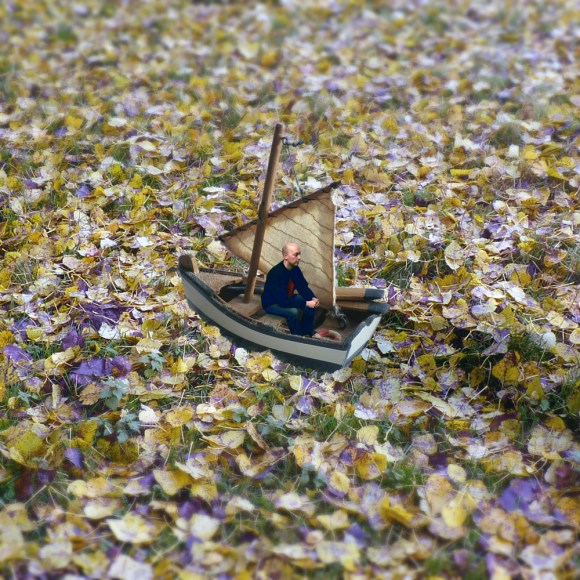
there’s a little red boat just barely afloat,
In the bay being bossed by the sea,
a little old boat just barely afloat,
the screaming sea-gulls agree,
a scene that I love and is me.
Ten years have passed since I posted the below. I have now come across another account of the events and history, which can be read here: Porthleven 1948
John Henry, Billy, and Tom Richards
2015: A friend of a friend has just posted this Video of the Energetic on facebook. Great to see.
Film from: facebook.com/michele.r.dyer/videos/10207272809279447
Last October (2011), I posted a picture of the fishing boat PZ. 114 “The Energetic’ and The Richards Family – Porthleven pre-1948.
It’s a sad story. I have copies of the Western Morning News from the time.
25th June 1948 – Six brothers and friend went to sea and only one came back. My Grandfather ‘Perkins’ was one of those men that was lost.
At a quarter past six on the 25th June 1948, on a lovely summer’s evening, we left our little home port of Porthleven, after having bid farewell to our loved ones, and telling them to expect us back tomorrow at midday.
We were in company with four or five other boats which comprised the long-line fleet.
As we left the harbour and proceeded in a south westerly direction, we could see at a distance a bank of fog and after we had been on our way for an hour we entered into this dense fog; at first we thought it might have been patchy but after having continued for an hour and half longer, we came to the conclusion that it must be widespread.
By this time we had gone far enough and were in a position to shoot our bait nets.
Before doing this, however, we discussed between ourselves the advisability of shooting our nets immediately or whether to wait a while to see if the fog would lift before darkness fell.
The decision hung in the balance for some little time but at last we decided it would be as well to shoot right away. It is needless for me to say how important that decision proved to be.
At this time we were all inwardly conscious of our danger, and were sounding our fog horn at frequent intervals; then we put on our lights and were all on deck waiting for darkness to fall so that we could pull in our nets.
In the meantime, we had heard two or three steamers pass down some distance from us, but now we could hear one approaching from the south east and, by the sound of its fog horn, we had the feeling that it was coming towards us and might come very near us, so we lit a flare and continuously sounded the fog-horn.
Not being under power, we were helpless to anything more, but still the ship came on and on, and at last we saw her break through the fog about 300 yards from us, and coming straight for us.
We did everything in our power to draw attention to our presence, all to no avail, and we now realised that nothing could be done to avoid a collision.
As a crew we now parted company; three of us went forward in the bows and the rest of stayed aft – I never saw them again. All we could do now was wait for the moment of impact. The suspense was terrible and I can see it all happening now. Crash! Into our side went the steamer, its bows going in about a third of the way and pushing us down on an even keel.
The sea was rushing from aft towards us, and the next moment I was going down under the water, seemingly for ages, being drawn down and down by the suction from the boat.
While under water I became unconscious of the fact that I was holding something in my right hand. It was a canvas buoy, a float we used on our gear. Just how I came to be in possession of it, I don’t know, but it was now drawing me quickly to the surface.
My trip down and up must have been very quick, for when I came to the surface I noticed the steamer had not yet passed by, and the first thought that entered my head was the danger from the ships propellers. So, hanging on to the float, I did my utmost to kick myself away from the ships side.
I remember at this time being conscious of one of my brother being close at hand fighting for his life, but only for a moment for the sea was in a turmoil and he was soon dragged down, never to appear above the surface again.
I was continually being drawn down under water, but after a while the sea became calm and I was able to open my eyes and look around; at once I saw our shooting roller within easy reach of me, I grasped this, and at the same moment I realised that all of the air had gone out of the canvas float onto which I had been holding; I let it go for it was no further use to me.
The spar to which I now clung proved a very insufficient means of support; I kept going down and up and when I was under, because of its circular shape and the motion of the sea, it was inclined to roll away from me, and I had great difficulty in holding on to it.
Then it was that I heard the last dying gasp of one of my brothers and I realised within myself that they were all gone and I was the only one left.
As the full force of this broke upon me, I was overwhelmed and sorely tempted to let go; it seemed far easier for me to die rather than to live. But the Lord bought before me a vision of my wife and two dear children and I pictured all that my loss would mean to them, and so I clung fast. Three times I was sorely tempted to let go, but each time the Lord bought the same vision before me.
It was at this time that I looked around me once more and there I saw, again within my reach one of our dans which is made of cork with a 12 or 14 foot staff up through the middle of it; This we used as a mark attached to our long lines.
Drawing this toward me, I placed my feet around the bottom and my arms around the top and felt fairly well supported in the water. Then I unlaced my boots and kicked them off.
I now had time to consider my position; I was out in the ocean, 10 miles from the nearest land, surrounded by a thick fog; I thought that the steamer which has sunk us had continued on its way, ignorant of the tragedy, and I felt alone in this ocean of sea. How long would I be able to hold out?
As I thought of my hopeless position I lifted up my heart to the Lord crying out aloud, “Oh God, I know that I am thy child, and I am not afraid to die; but if be possible, to bring me out of this!” How long I prayed I have no knowledge but after some time, as I looked towards the west, I saw the mast head lights of a steamer. Not realising that it was the same ship that had collided with us but thinking it was another steamer, I commenced shouting, “Help! Help! Help!”
After some little time I heard a voice directly behind me saying “Hold on old timer – we are coming!” The next moment I was taken aboard the ships lifeboat and, as I felt someone cutting away my clothes, I became unconscious.
I regained consciousness to find myself in the ships hospital being force to drink hot milk and coffee and being given a continual renewal of hot blankets. Another stretcher was wheeled into the sick bay and upon it lay Mr Mewton who had gone to sea with us for a pleasure trip. He was unconscious but still alive, and the second mate of the ship commenced artificial respiration at once.
This continued for about five hours, then one of the crew told me they would like to take me to another room; I knew the reason for this – Mr Mewton had gone beyond all human aid. You can imagine something of what I passed through as I passed through in the ship all night and well into the next day, wondering how, when and where I would get ashore and how I was going to face my brothers’ widows and fatherless children, and my poor aged father. Continually I cried to God to see me through.
At midday, after being given a spare set of clothing, I was taken off the ship by a lifeboat from the Scilly Isles and into the same boat was lowered the body of Mr Mewton. It took us three hours to reach St Mary’s harbour, and here I was interviewed by the Customs Officer, and had to go through the ordeal of giving a detailed account of all that had happened; But God’s presence was very deep within me, and it was a strength and power outside of myself which was bearing me up.
My ordeal was not yet complete, for I was taken away by the Police Officer to the mortuary to identify Mr Mewton’s body and from there to the inquest. But God was true to His promise, and was with me during this experience. It was now half-past four and the little steamer which plies between the Isles of Scilly and the mainland was due to leave for Penzance.
We steamed into the harbour at eight o’clock; there was a great crowd there to meet me, amongst them were many loved ones including, of course, my wife, Pastor and Mrs Matthews and a number of Church members were also there.
After reaching home my Doctor came and amongst the questions he asked me was, if I had taken in any sea water. I told him that I did not remember having taken a spoonful, and after examination he was amazed to find this was true, particularly taking into consideration the fact of my not being able to swim and being submerged under water so much – but I know it was God who was keeping me.
The following day was a trying ordeal for me when a number of my nephews and nieces visited me.
Many times during this experience the enemy had led me to the very brink and depths of despair but God, Praise His Name, kept me though it all; and He that has kept, I am confident, will keep, and it is to God that I give all of the glory for preserving me.
Ralph Richards (Sole survivor of the Porthleven fishing boat Energetic.)
Being 300+ miles from the homeland can cause a fading Cornishman to suffer from Pasty Withdrawal, and this is not a good thing.
We have been known to send for emergency supplies from Warrrens, which I have to say are good. Even ‘ansome’ when the withdrawal is severe.
But this time, with budgets an issue more than ever, I was forced to think how much our usual homemade pasties cost?
It’s easy to click click from the smartphone and order 10 Medium Steaks for £26, that’s what it was on the last time we weakened. But now 10MSP from Warrens is £31!
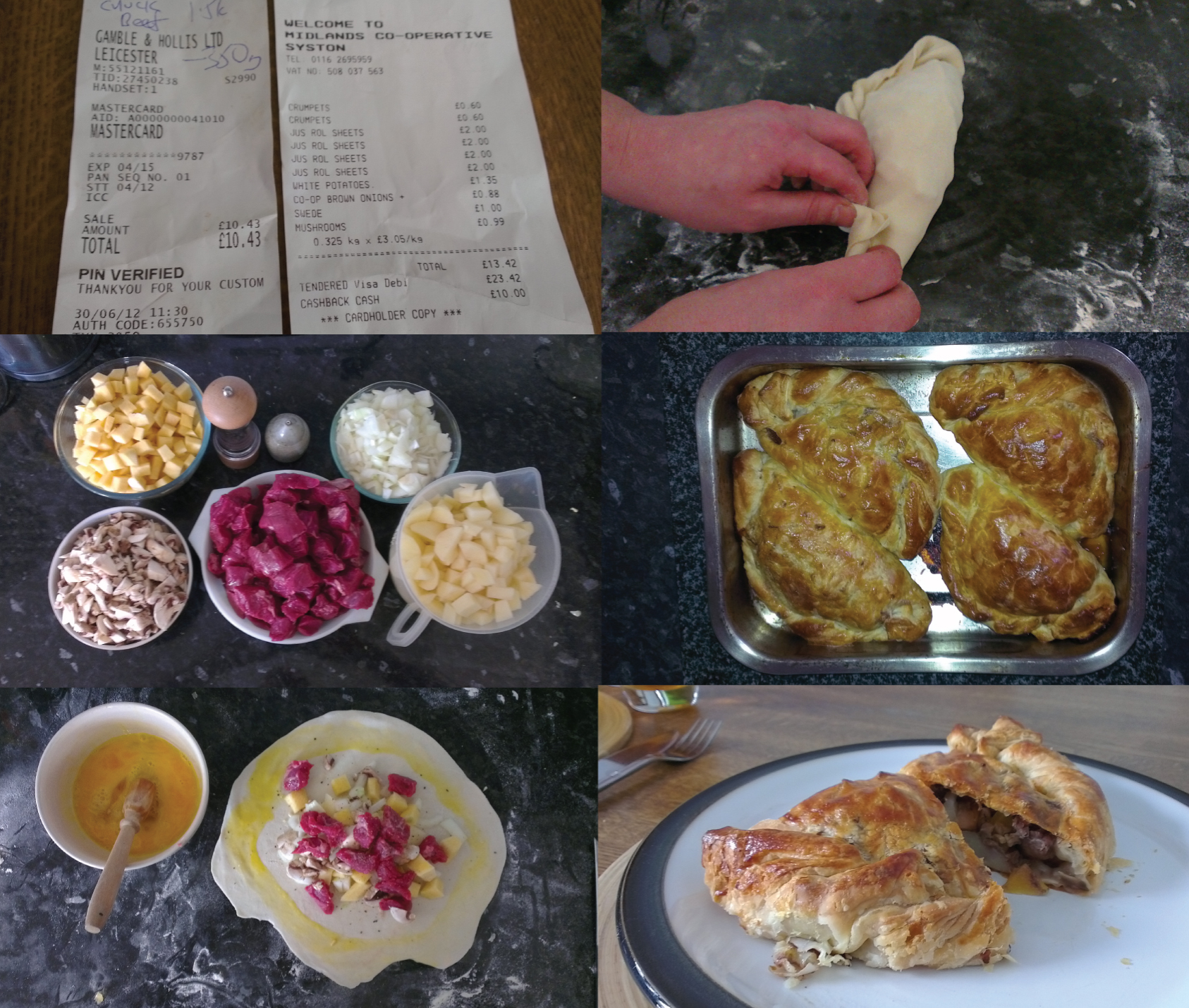
16 Homemade Pasties
1.15kg Cubed Beef – 6.95/kg Gamble & Hollis Syston: £8.00
Pastry – OK, I could make it myself, yeah yeah, but I’ve 2 kids pulling at my trouser legs so this is easier!
So, 4 packs of Jus Rol Pastry (I re-bash Puff cos I like Puff!), that’s 8 rolls: £8.00
8 potatoes, half per pasty: 50p
5 Onions: 40p
One Swede (which the Cornish call Turnips): £1
’bout 20 Mushrooms, 1/3 Kg: £1 (Oh yes! Mushrooms!)
Eggs: we occasionally get ours fresh from the friendly hen lovers up the road. (Thanks A&K)
Pepper and Salt
So, that’s £18.90 for 16 Pasties: £1.18 each
Warrens by Post £31 for 10 Pastes: £3 each
So here’s our simple Cornish*Pasty Recipe again:
A JusRol ‘roll’ will do 2 medium pasties, cut the roll in half, screw the bugger up and roll it out to a circle and put on:
A handful of chopped potato,
A handful of chopped onion,
A handful of chopped swede,
A handful of chopped mushroom,
A handful of cubed beef (1cm sqs),
Shake a pinch of salt,
Shake a good dash of pepper,
Eggwash around the edge.
Fold the top edge forward to the bottom edge and crimp.
Make the other one. One is never enough!
In a greased baking tin, eggwash (or milk, or egg & milk) the pasties.
Cook on high 220° for 30mins and then lower to medium 170° for 30mins.
If it’s burning (cover with tinfoil).
Eat!
And don’t let any northerners mention gravy!
(*I’m Cornish, I was brought up on these things, so I’m calling ‘um Cornish – even with the personal touch of mushrooms!)
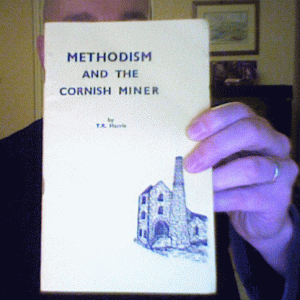
I was given this pamphlet recently by a friend of a friend. It was produced in 1960. It’s the type of thing that could easily Have been lost! I found it a worthwhile short read -but then again I can identify with being brought up in the 70s in the pews of Cornish Methodism.
This account details how at a certain point in history, the church and its activities had a great effect… (?)
Even if you have no spiritual life/faith, Christian ideas have always given practical advice about how to handle failure, dejection and loss… etc.
It may be no accident that the huge increase in the incidence of common mental health issues seems to coincide with the decline of religion in the West and the loss of a whole tradition experienced in dealing with, if not answering, life’s unanswerable questions. There might be extreme misdirection but there might be also valuable insights offered by Christian teaching if you can fend off the theological language and hoopla in which it’s dressed.
Download a scanned copy here – GDRIVE link: Methodism and the Cornish Miner
Gotta make it positive! (says the little sprite on my right shoulder). Awwh *!£#@!##%! !*#&*! (says the little !*#&* on t’other)…
It must have been 15 years or so ago that I wrote “We’re going outside, I may be sometime…”
Sun sets on St Ives
‘We’re going outside and we may be some time’ Twenty-five years I grew, nurtured on Cornwall and the Cornish manner, the Cornishness that is now part of me.I still day-dream, of a ‘T’ shirt that announces “I’m Cornish and proud of it…” …is that all I have to cling to? (I haven’t even got this day-dream of mine). I spent a childhood full of Cornwall’s riches: pebbles a sand, fIzzypop in cans, wind and rain, tunnels, holes, alleys & bunkers, vast sun-scorched gorse torched views, I could see both coasts from our bathroom window. Spirits of the sea always whisper to me, the loudest whispers I’ve ever heard. I’ve heard in Leicestershire, Crewe and Nice, I saw a little red boat barely afloat. I cried at the beauty surrounding me as the holidayers screamed and sizzled and I laughed.I sat alone at the end of the phone, I ran with the gang, at low tide, across St Ives Bay, on new years day. We drank and we sang and played in the band. Gran bought saffron buns at Sunday-school treat, and pasties and pasties and pasties. Slept in the snow on the rocks on Carn Brea, laughed at what nan a grandad would say (that’s not the grandad that died in the fishing boat accident). Ate winkles with pins and vinegar picked from Porthleven harbour, got filthy.Held on tight as the storm wind rips so hard it bites. Sat in a haystack in the sun and got covered in mites.I’ve lay for hours and been soaked up by the whole of Mounts Bay, on the clearest ever, hottest ever, hottest ever day.Walked home at midnight from to Camborne from Hayle, met a girl in Redruth and another in St Just, got drunk in Crantock, earnt a wage in St Ives ‘ saw a dream in St Austell, learnt some verbs in Fowey… grew towards man from boy in Cornwall… …only, they’re all memories. I return and see the most rugged of faces smile and share the day like children returning to play, waves so worn from years of scorn, skies so blue they seem brand new. A scarred town refuses to frown, yet sings and raises its glasses, everywhere I look I see me and I see pasty smiles, rugby miles, unique Cornwall style saying this is us but we do say we. I’ve moved away now, don’t know why, but I know I can’t go back. Jane’s not there, Craig’s gone, David’s moved off, So has Jon. Matthew’s in Manchester, Lisa’s in Suffolk, Richard’s in Cardiff, Kay’s in Bath, Lee is in Luton and Mark is in Crewe, and I’m in Leicester for something to do.Cornwall, in essence, has everything, God and the Devil are surely within. but it hasn’t got what I’m looking for. . . . what am I looking for? I’m going outside and I may be some time…
I caught a podcast recently where Ernie Rea and his guests discussed “Pilgrimage”.
‘Beyond Belief’ BBC Radio 4 : “Every year more than 100 million people around the world go ‘on pilgrimage’, the biggest mass migration of people on the planet. Two and a half million Muslims visited Mecca for last year’s Hajj and over 600,000 visited Graceland to worship at the shrine of Elvis Presley. Is there something in the human psyche which seeks fulfillment from… [pilgrimage]?”
I understand pilgrimage to be: a journey outside the norm or an escape to something significant – typically aiming for a place of importance central to or ‘at the heart of’ a person’s world view. A seeking to discover, understand or be healed? The ‘quest’ is sometimes linked with oracles and finding a source of counsel or understanding. It would seem this is a common human experience that has been specifically studied and written on widely.
To venture outside of the norm…
I read books to discover? escape? understand?
I watch films to discover? escape? understand?
I listen to music to discover? escape? understand?
I sing and play music to discover? escape? understand?
I cycle to discover? escape? understand?
I surf the web to discover? escape? understand?
I imbibe festival and celebrations to discover? escape? understand?
I wander the countryside to discover? escape? understand?
I feed the birds and talk to my pets to discover? escape? understand?
I live to discover? escape? understand?
Most weekends we have a holiday “Holy Day” where we make an effort to do something to discover, escape, understand or experience something out of the ordinary.
Are we ourselves on an ongoing macro-(micro?)-pilgrimage to the outside?






 Jules P Richards