A quick flick of our wigglers;
A quick flick of our wigglers;
I’m a tad tired of banging on about ‘riding my bike’ – and I expect u r too.
And so, last ‘bike’ post for a while (perhaps).
I use the phrase ‘riding my bike’ because the term ‘cycling’ has accumulated so much baggage over the last year. I do not see myself as a cyclist any more than you consider yourself a driver. I simply ride my bike to work and back. And go for the occasional spin round the block.
As mentioned before, I have made the transition from a road-based cycle commute to a person-based cycle commute. It’s an ongoing work-in-progress, it’s taken a year so far, to reform my mindset from a driver’s road-based travel to a more contented alternative.
Driving habits are too dangerous for most roads to accommodate pedal bikes.
The drivers’ mindset/habit is not healthy (indeed often unhealthy), whether driving, riding, walking or just waiting in a queue.
It’s hard to remove oneself from the ingrained mentality of gotta be, gotta have, gotta be in front, gotta move on, I wanna, I wanna, I wanna, I wanna, I wanna really really, really wanna zigazig, I need to be somewhere else, I need other… It’s linked with the ‘idea’ of success, achievement and ambition. But is it wholesome, necessary or truly successful?
There is an alternative which requires two things:
(i) to realise a renewed perspective on the act of travelling and being.
(ii) implementation of travel facilities (new ways) that accommodate modes other than motor vehicles.
I ended a previous post: I’ll have to risk the possible prang at 10mph on an estate road rather than the potential ‘prang’ at 30mph on the best road. This is misjudged and perhaps should be: I now seek to travel in a more amiable way.
I also ended a previous post: A new route with many low speed hazards and manoeuvres. Old route occasional high-speed potential killers. This is misjudged also and perhaps should be: While there are hazards to be aware of one now seeks to negotiate rather than manoeuvre.
I ended a previous post with 4 questions:
Should cyclists freely share space on the road?
Current answer: yes, but equality is currently rarely achievable.
Should cyclists be given road-quality cycling space elsewhere?
Current answer: I think it’s possibly a workable healthy alternative.
Should cyclists be happy with 3rd rate white-lined gutters?
Current answer: no, where possible they should be implemented, but note; road users frequently don’t observe ‘white lines’.
Should cyclists just shut up and get on or off their bike?
Current answer: perhaps cyclists might pipe down, but that’s a subjective anti-lycra opinion – More importantly people who are so inclined should where possible get on and off their bikes and discover new ways.
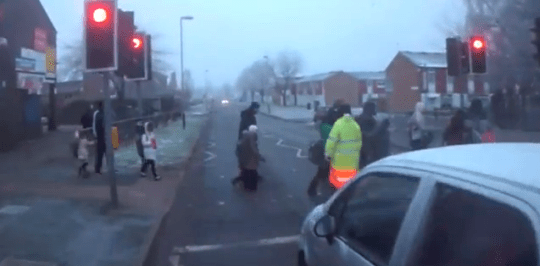
A frosty cycle commute – Goscote to Leicester.
I’ve doubled the speed and split it into two parts to fit it on youtube. (Filmed Wed 16th Jan 2013)
Out for the first round trip of the year. (last weekend was just a trolly ride to the leisure Centre)

Such a different ride to the daily commute – out in the country, on roads (actual roads!), letting your body drive the bike and ride!
In comparison, “the daily commute” is a dodge-fest, a series of trolly rides between and around numerous obstacles, detritus, and incompatible structures and traditions.
It’s been a while since I rode out on the ‘open’ roads. I used to ride them on the commute but considered them too dangerous and so in September switched to the ‘cycle-path’ jungle.
Riding today brought me to entertain the old road again.
The problem with the cycle-path v mechanical-pedestrian v automobile route is that it seems a series of compromises:
As I say sometimes it’s near impossible – other road users do not have to constantly decide where do/should i fit in here?
#keepcycling ?
Anyway the ride on the relatively open country roads of Leicestershire was again a joy.
#keepcycling !

Give us this day our daily bread, and forgive us… ?
Today was a normal Saturday.
Thankful to Em who did a 4 hour stint teaching swimming.
We had dancing first thing, or at least thought we did (Doesn’t start till next week).
So we did a small Tesco shop and a library visit to stock up on books for the next 3 weeks.
Soup and salad for munch. Nice.
Then the first trip out on the bike this year (except for the daily commutes).
Met up with Em at Gymnastics. Then a trip back…. Many roads and paths full if debris and in parts very slippy and dangerous. But the fresh air, nature, endorphins…. Gr8.
Endorphins kept buzzing on my return, and so homemade pizza dough (thanks to netmums) with the kids for their tea.
Then dough was pummelled and rested and a loaf of homemade bread was created! Thanks again to Holly’s recipe from GBBO. Gr8 therapy.
The kids tucked away and a curry from a jar was sizzled, ate and enjoyed.
I am thankful for our daily bread.
All u need is:
500g strong white flour.
10g salt
5g caster sugar
7g sachet of dried yeast
350mls lukewarm water
Simply mix all the ingredients together in a large bowl with a metal spoon just till it’s together, and leave for ten minutes.
Tip onto the table and knead it 10 minutes. This is therapeutic, enjoy it.
Put it back in the bowl and cover the bowl with clingfilm.
Leave on the side (in a warm place) until the dough has doubled in size, about 30 minutes…
Tip the enlarged size dough onto your table and push down a few times on the dough to release air bubbles. Do not knead it. Then fold and shape your dough to your preferred bread shape and place on a baking tray.
Don’t cover the bread. Leave the tray on the kitchen top till the loaf’s double in size, another 30mins. Top the loaf with seeds or supt if u want.
Make some quick cuts on the top of the loaf and put it on the middle shelf of a 200deg c oven.
Bake for about 35 mins. Check the bread occasionally and rotate or change shelves if it’s over/under doing.
Bread’s done when it sounds hollow when you knock the underneath.
Thanks Holly, full details here.
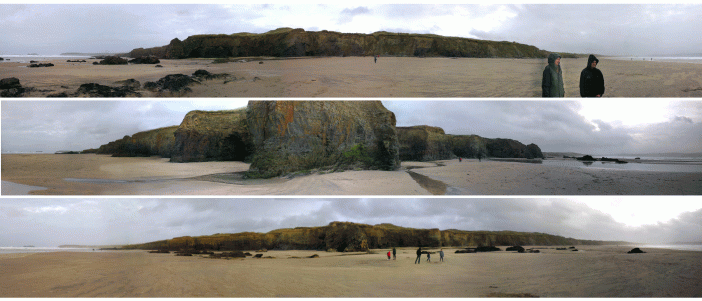
Having lived in West Cornwall until I was twenty something years old, Gwithian/Godreavy Beach in Cornwall is a place I spent many hours as a boy and young person.
Those who know it will probably also consider it a special place.
Carbis (St.Ives) Bay is a unique formation and the stroll along the East edge of the bay from Godreavy around to Hayle is quite an experience.
It’s become a Christmas – New Year tradition to take the stroll if we’re in Kernow seeing the folks etc.
The best time to experience it is without emmets… therefore Autumn through Winter and Spring. It is every-changing, and the extremes from sunbaked bluest of blue days through to the wildest of salty howls can be ‘awesome’ (in traditional sense, not in the youf speak sense).
If you go to West (proper) Cornwall on Holiday, be sure to seek it out.
The WordPress.com stats helper monkeys prepared a 2012 annual report for this blog.

Here’s an excerpt:
600 people reached the top of Mt. Everest in 2012. This blog got about 3,900 views in 2012. If every person who reached the top of Mt. Everest viewed this blog, it would have taken 7 years to get that many views.
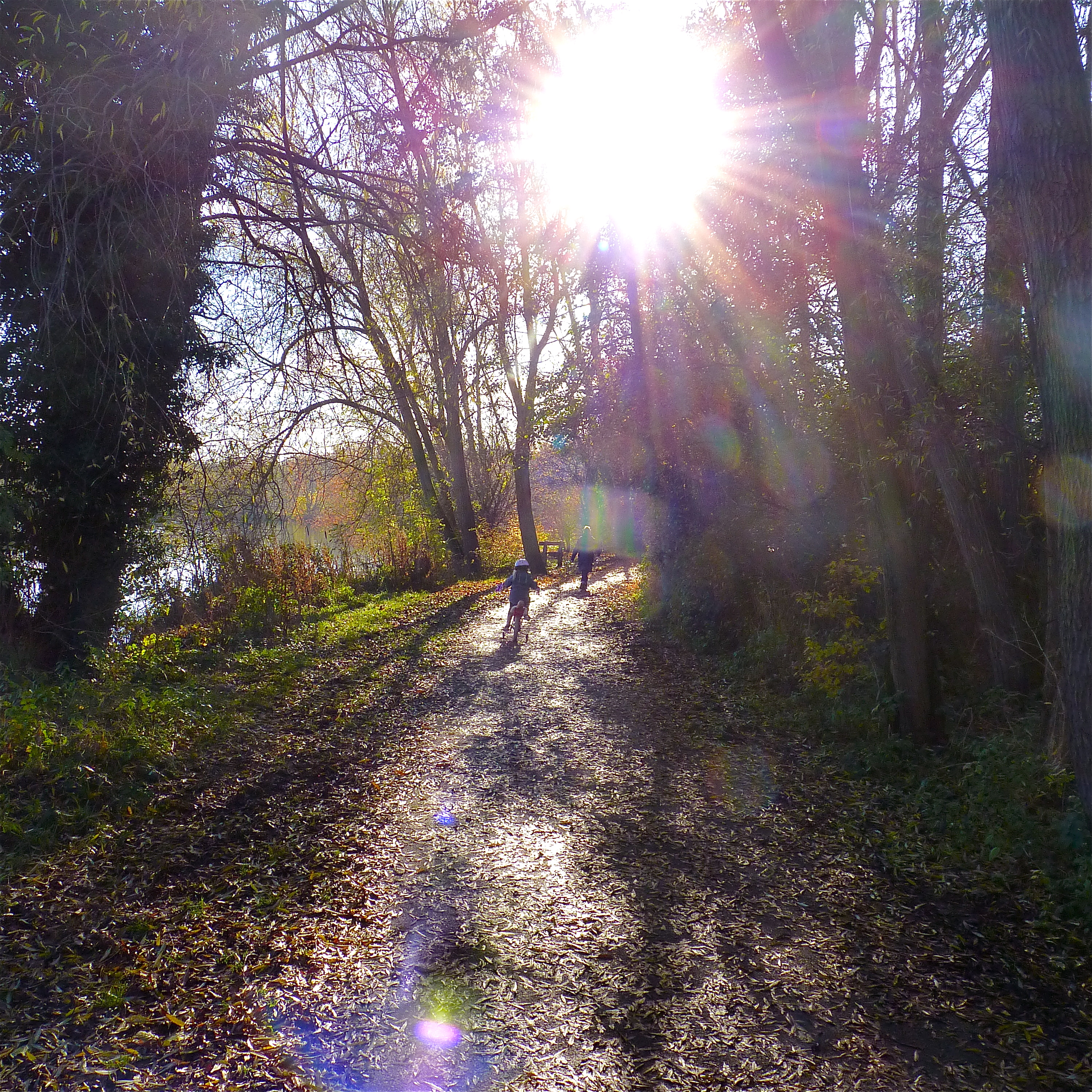
I recently heard someone, a scientist, refer to what they saw as ‘awe-inspiring’.
To inspire awe? It’s a common notion, even in this age where we know how everything works and are masters of our own kingdoms. Supposedly.
An off the shelf definition: magnificent, amazing, astonishing, awesome, breathtaking, grand, impressive, majestic, mind-blowing, remarkable, stunning, wonderful…
Wikipedia quotes “Awe is an emotion comparable to wonder but less joyous… an overwhelming feeling of reverence, admiration, fear, etc., produced by that which is grand, sublime, extreme…”
It quotes Paul Pearsall “…a sense of connection with a startling universe that is usually far beyond the narrow band of our consciousness. …the 11th emotion, beyond those now scientifically accepted (i.e., love, fear, sadness, embarrassment, curiosity, pride, enjoyment, despair, guilt, and anger).”
Ah ’emotion’, that old chestnut.
What would the world be like without emotion?

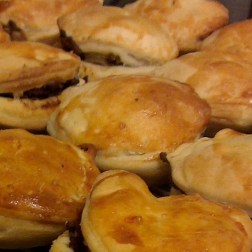
It’s a tradition… Meat pies and Ginger Biskwits for Crimble!! They don’t stay around for long.
Recipes (from last year) here: Ginger Biskwits Mini Meat Pies
Happy Christmas. Pass the Port!

It’s almost Christmas and even the sternest of critics is likely to hum at least a bar of something related to Christmas over the coming few weeks.
Many will have heard the Christmas story again (you can find it in Luke 2:1-20). Surprisingly the written part of this story is relatively short. The details in the Biblical account have been somewhat embellished overtime by high and pop culture retellings.
For me it helps to ‘realise’ the story to know that the flowery bits are there due to colourful imagination and that in essence it was possibly a simple real ‘down-to-earth’ event.
Many take for granted that Jesus was born in a stable, it’s hard to un-imagine the imagery; however, the Gospel never mentions exactly where the baby was born – just where he was laid afterward. It’s just one of the embellishments built into mythology surrounding the Christmas story that we take for granted.
Did Mary ride a donkey to Bethlehem? Perhaps, but there are various other possibilities. The Bible doesn’t say how she got to Bethlehem. It only says that she came with Joseph.
Did Mary arrive in Bethlehem the night she gave birth? The Bible does not suggest this. They could have arrived weeks earlier. The Bible simply states, “while they were there [in Bethlehem], the days were accomplished that she should be delivered” (Luke 2:6). Arriving in town well before her due date would make more sense.
Thanks to Huw Spanner for these thoughts:
There were no inns or stables in first-century Bethlehem! The Gospels imply that he was born in a house full of family. Ordinary houses then consisted of a lower ground floor where the family’s animals spent the night and an upper ground floor (ie a stone platform) where the family lived and slept. The manger would simply have been an alcove in the side of the platform. More affluent families would have had a first floor – an upper room (as in the Last Supper) for relatives and other guests to stay in.
Early translators didn’t really know what the Greek word meant, so (IIRC) they guessed it meant “inn”. There is no mention of a stable in any of the Gospels in any translation. But first-century Bethlehem was much too small a town to have an inn, let alone a stable. Besides, the reason Joseph was in Bethlehem in the first place was because he had to go back to his home town for the Roman census. Therefore, he would have had family in Bethlehem, and all his relatives would have come down for the census. No one would have stayed in an inn (even if there had been one) if one of their extended family had a house locally – if for no other reason than that it would have been very insulting to their extended family. Joseph and Mary had been engaged when she became pregnant, and they were certainly married by the time she gave birth.
Thus, the situation the Gospels imply is that Joseph’s family home was full of visiting relatives – the upper room was full – so the baby was put in the manger. The house would have been warm, the manger would have had hay in it and Jesus would have been surrounded by his extended family. A very different picture from the one that Christmas carols and cards, and authors of blessed thoughts and Nativity plays, like to paint.
… in essence it was possibly a simple real ‘down-to-earth’ event.
 Jules P Richards